

Table of Contents
1 Quick Answers
Is it dandruff or scalp psoriasis?
Greasy, yellow-tinted flakes usually point to dandruff. Dry, thick, silvery-white scale with visible redness underneath points more toward psoriasis.
Can a photo tell you for sure?
Not reliably. Even in forums where dozens of people weigh in on a single photo, the guesses often split three or four different ways.
Is scalp psoriasis contagious or hygiene-related, like dandruff can feel?
No. It’s autoimmune, not caused by yeast, oil, or how often you wash your hair.
2 A Question That Never Actually Gets Settled
Search “dandruff or psoriasis” and you’ll find the same photo, over and over, posted by different people, in different subreddits, months apart.
Someone posts a close-up of their scalp. The replies pile up fast. A few people are certain it’s dandruff. A few are just as certain it’s seborrheic dermatitis. Someone else insists it’s textbook psoriasis. Every time, at least one reply admits it’s genuinely hard to tell from a picture alone.
That pattern is the part I find most telling. Not the disagreement itself — the fact that it repeats, thread after thread, with people who clearly know more than the average person about scalp issues still landing on different answers.
It tells you something the checklists don’t: this confusion isn’t a knowledge problem. It’s a limitations-of-appearance problem. Even people actively comparing flake color, texture, and spread — the same signals I’ll walk through in this article — regularly can’t agree from a photo. If crowdsourced pattern-matching from a forum full of invested people can’t settle it, a quick glance in your own bathroom mirror probably can’t either.
A reader wrote to me a few months ago, and her situation was a real-world version of exactly that same uncertainty — except it played out over six months, not a single thread.
She was convinced she’d tried every dandruff shampoo on the market.
She probably had. Zinc pyrithione. Then ketoconazole. Then back to zinc when the ketoconazole “stopped working.” That’s the rotation people fall into when a flaky scalp won’t quit.
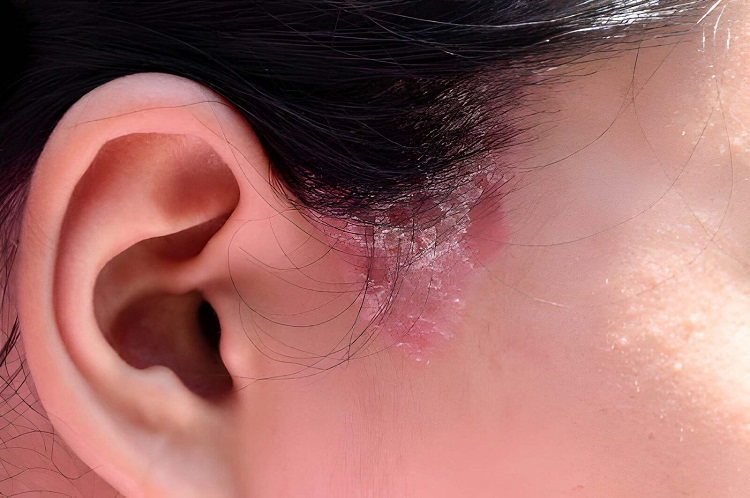
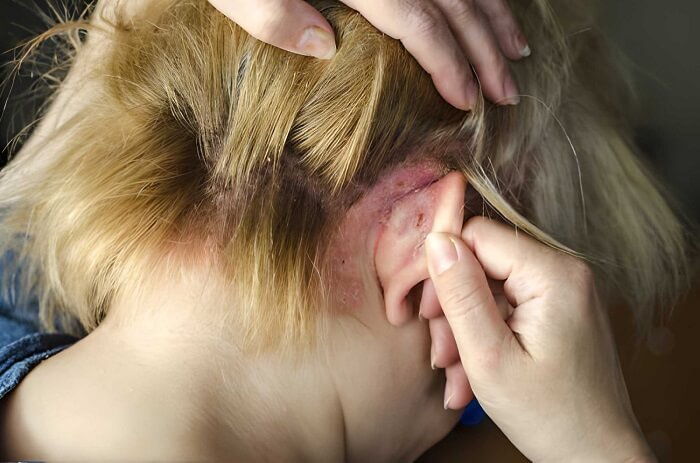
Six months of this. And things had gotten worse, not better. The flaking along her hairline was thicker than when she started. Almost in passing, she mentioned a patch behind one ear that hadn’t been there before.
That detail made me stop. It’s the moment scalp psoriasis vs dandruff stopped being an abstract comparison and became a real question worth digging into.
Here’s what struck me first. Nothing about her routine was wrong. She was using well-studied active ingredients. Applying them consistently. Giving each one weeks before switching.
By most standards, that’s a reasonable approach to dandruff. So why wasn’t it working?
I asked a few more questions than she probably expected. Was the flaking greasy or dry? Had the itch changed — mild irritation, or something closer to burning? Was that patch behind her ear raised, or just discolored?
Small questions. But they’re the ones that actually separate two conditions people lump together constantly — the same ones that never quite settle those forum threads either.
Her answers didn’t fit the dandruff pattern at all. The scale was dry and thick, not greasy. The patch was slightly raised. And when I asked about other areas, she mentioned her elbows had been rough lately. She’d blamed it on winter.
That’s when it clicked.
She hadn’t failed at treating dandruff. She’d been treating the wrong thing entirely, for six months, with products built for a completely different biological process.
Same symptom on the surface — flaking, itching, discomfort. Underneath, something else was driving it.
And that gap, between what a condition looks like and what’s actually causing it, is exactly where most flaky-scalp confusion starts — whether it’s playing out in a six-month shampoo rotation or a forum thread that never quite gets a final answer.
3 Why Appearance Alone Misleads People
Most articles on dandruff vs scalp psoriasis treat appearance like a reliable sorting tool. Greasy flakes, that’s dandruff. Thick silvery scale, that’s psoriasis. Case closed.
I don’t think it’s that simple. And I don’t think it’s just my opinion — it’s what the biology actually shows.
Early or mild scalp psoriasis doesn’t look like the textbook photos. It doesn’t always show up as raised, well-defined, silvery plaques. Sometimes it’s just fine scaling. Slightly dry. Barely different from ordinary flakes.
That’s not a rare exception. That’s the overlap zone where most misdiagnosis actually happens.
Think about what that means practically. Someone with mild scalp psoriasis looks in the mirror, sees flakes, reaches for a dandruff shampoo. Reasonable decision. Except the underlying process — immune-driven, not yeast-driven — doesn’t respond to the same logic.
They might get partial relief, too. Some ingredients used in dandruff shampoos, like salicylic acid or coal tar, can soften scale regardless of what’s causing it. So the shampoo “kind of works.” Just not well enough, and not for long.
That partial response is almost worse than no response. It reinforces the wrong diagnosis instead of correcting it.
Here’s where I push back on how this topic usually gets covered: appearance-based checklists aren’t wrong, exactly. They’re just incomplete. They work well once a condition is established and visibly distinct. They work poorly in the early stages, which is precisely when people are searching for answers.
If you’re relying on a mirror and a checklist to make this call, you’re working with real limitations. Not because you’re missing something obvious — because the two conditions can genuinely converge in how they look before they diverge in how they behave.
That’s the gap worth understanding before we get into what actually does separate them.
4 Scalp Psoriasis vs Dandruff: The Real Difference Is Mechanism, Not Symptoms
If appearance can’t be trusted early on, what can?
Mechanism. What’s actually happening under the surface. This is where scalp psoriasis vs dandruff stops being a symptom comparison and becomes a biology comparison — and it’s the part most articles skip past on their way to the checklist.
Dandruff starts with a yeast. Malassezia lives on everyone’s scalp, feeding on the oils your skin naturally produces. In most people, it stays at a manageable level. In some people, for reasons that aren’t fully understood, it overgrows. The scalp reacts to that overgrowth with irritation, faster skin turnover, and visible flaking.
Notice what’s driving all of it: oil, yeast, and a local skin reaction. Nothing systemic. Nothing immune-wide.
Scalp psoriasis works differently, and the difference isn’t subtle once you understand it. It’s an autoimmune condition. Your immune system misfires and tells skin cells to reproduce far faster than normal — days instead of weeks. Skin piles up faster than it can shed. That pileup is the thick, scaly plaque you see.
This isn’t a local irritation. It’s a systemic immune process that happens to show up on the scalp.
Why This Distinction Actually Matters
That distinction explains something I think gets underexplained everywhere else: why dandruff shampoos plateau against psoriasis.
Antifungal ingredients like ketoconazole target yeast. They reduce Malassezia levels. If your flaking isn’t yeast-driven in the first place, reducing yeast does very little. You’re solving a problem you don’t have.
This is exactly what happened with the reader from the opening story. Six months of antifungal and zinc-based shampoos, rotating between them, expecting a different result each time. But the mechanism driving her flaking wasn’t yeast. It was an immune system running her skin cell turnover into overdrive. No amount of antifungal rotation touches that.
I want to be direct about something here, because I think it matters more than most guidance admits: treating the wrong mechanism isn’t a minor inefficiency. It can cost months. Symptoms don’t just fail to improve — they can quietly progress, the way her hairline flaking and that patch behind her ear did.
Once you’re thinking in terms of mechanism instead of appearance, the rest of this comparison gets much easier to reason through. The table below is built around that same logic — not just what each condition looks like, but what’s actually causing it.
5 Side-by-Side Comparison
Here’s the comparison in one place. Useful as a quick reference — but not the whole story, which is why it comes after the mechanism explanation, not before it.
| Feature | Dandruff | Scalp Psoriasis |
|---|---|---|
| Cause | Yeast overgrowth, excess oil | Autoimmune-driven cell turnover |
| Flake texture | Greasy, yellow/white | Dry, thick, silvery |
| Spread | Confined to scalp, sometimes eyebrows/beard | Can cross hairline to forehead, neck, ears; may appear on elbows, knees |
| Itch intensity | Mild | Can be intense, sometimes burning |
| Hair loss | Rare | Possible (usually temporary) |
| Course | Comes and goes | Chronic, flare/remission |
| Associated conditions | None known | Linked to psoriatic arthritis, cardiovascular risk |
Look at this table the way most people would, and itch intensity stands out first. It’s the symptom people notice, complain about, and search for.
It’s also the least reliable row here.
In the reader’s case, her itch was moderate the entire time. Not mild enough to rule out psoriasis. Not severe enough to confirm it either. If she’d used itch as her main clue, she’d still be stuck.
What actually gave her away were two other rows: texture and spread.
Dry, thick scale instead of greasy flakes. That’s texture. And a patch showing up behind her ear, plus rough skin on her elbows — that’s spread crossing beyond where dandruff typically stays.
Neither of those rows gets much attention in most comparisons. Itch and flaking get all the focus, probably because they’re the most obvious complaints. But obvious isn’t the same as diagnostic.
If you’re trying to make sense of your own scalp using a table like this, I’d weight it the same way her case did. Itch tells you very little on its own. Texture and spread tell you a lot more — and they’re worth paying closer attention to than the symptom that actually bothers you the most.
6 The Overlooked Diagnostic Clue: Spread and Systemic Signs
If I had to pick one signal to trust above all the others, it’s spread.
Not itch. Not flake color. Where the symptoms show up, and where they don’t.
This is the row most scalp psoriasis vs dandruff comparisons treat as a footnote. A quick mention that psoriasis “can also appear elsewhere on the body,” tucked in after paragraphs about flake texture and greasiness. I think that’s backwards.
Here’s why spread deserves more weight, not less.
The Biology Behind Why Spread Matters
Dandruff is a local problem. It’s tied to oil production and yeast activity on the scalp itself. There’s no biological reason for it to show up on your elbows, knees, or lower back. Those areas don’t have the same oil-yeast relationship driving scalp flaking.
Psoriasis doesn’t have that restriction. It’s not a scalp problem that happens to exist on your head. It’s an immune system pattern that can express itself anywhere skin turns over too fast — scalp, elbows, knees, lower back, behind the ears, the hairline.
That’s what makes spread such a clean self-check. If flaking or scaling is showing up in more than one of these unrelated locations, dandruff stops being a plausible explanation on its own. The biology doesn’t support it.
What This Looked Like in Her Case
This is exactly what the reader’s elbow detail meant, once I actually asked about it. She’d mentioned it almost as an aside — rough patches, blamed on dry winter air. On its own, dry elbows in January mean nothing. Paired with scalp flaking that wasn’t responding to antifungal shampoos, it meant a great deal. Two data points pointing at the same underlying process.
I think competitors under-emphasize this because it requires asking a question the reader wouldn’t think to volunteer. “How’s your scalp?” gets answered easily. “Have you noticed anything on your elbows or knees lately?” rarely comes up unless someone specifically asks it.
If you’re trying to sort this out for yourself, that’s the question worth asking. Not just what’s happening on your scalp, but whether anything similar, however minor, has shown up somewhere it shouldn’t.
7 Checklist: Should You See a Dermatologist?
At some point, self-diagnosis has to hand off to an actual diagnosis. Here’s how I think about that handoff.
I’m not able to diagnose either condition — only a dermatologist can confirm which one you’re dealing with. What follows is meant to help you have a more informed conversation with one, not replace that conversation.
None of these signs alone are proof of psoriasis. But the more boxes you check, the less sense it makes to keep rotating shampoos on your own.
See a dermatologist if:
That third-from-last item, joint involvement, is worth pausing on. It’s easy to dismiss as unrelated. It isn’t always. Psoriatic arthritis can develop alongside skin symptoms, and it’s not something to wait out.
The consistent thread here is escalation. One symptom that’s mild and staying put is worth monitoring at home. Multiple symptoms, in multiple places, over multiple weeks, is a different situation.
If you’re checking two or more boxes, that’s not a verdict. It’s a reasonable point to stop guessing and get an actual look from someone trained to tell the difference.
8 Why Treatment Approaches Diverge
Once you understand mechanism, treatment logic stops feeling like trial and error. It starts feeling like matching a tool to a problem.
This is where I think a lot of scalp psoriasis vs dandruff content quietly falls short. It’ll tell you the conditions need “different treatments,” then list ingredients without explaining why one set works for one problem and stalls on the other.
Here’s the actual reasoning.
Most OTC dandruff shampoos work in one of two ways. Antifungals like ketoconazole reduce yeast activity. Ingredients like salicylic acid or coal tar soften and lift existing scale, regardless of what caused it.
That second mechanism is why dandruff shampoos can produce partial results against psoriasis. They’re not treating the cause. They’re just breaking down the buildup sitting on top of it.
Softening scale isn’t the same as slowing the process creating that scale.
What Changed Once She Matched Treatment to Mechanism
This is exactly the ceiling the reader from the opening story kept hitting. Her shampoos could temporarily clear surface buildup. They had no effect on the immune signaling telling her skin to overproduce cells in the first place. So the scale kept coming back, thicker, because nothing was addressing why it was forming.
Her dermatologist prescribed a topical treatment built around a different target entirely — one designed to calm the inflammatory signaling driving that rapid cell turnover. Not stronger scale-softening. A different mechanism altogether.
Within weeks, she noticed less thickness in the patches and calmer itching at night. That’s not because the new treatment was more powerful in some general sense. It’s because it was finally aimed at the actual process causing her symptoms.
How Confident Should You Be in Each Treatment Option?
I want to be honest about how much confidence the evidence supports here, because overstating it wouldn’t serve you.
Topical corticosteroids and vitamin D analogs have solid clinical support for scalp psoriasis. They’re first-line treatments for a reason — the research behind them is strong and consistent.
Lifestyle factors are a different category. Diet, stress management, sleep. These show up often in psoriasis discussions, and there’s reasonable evidence they influence flare frequency for some people. But the evidence here is more individual, less uniform. What calms one person’s flares won’t necessarily calm another’s.
That’s not a weakness in the guidance. It’s just where the evidence honestly sits — solid ground on the medical treatments, more variable ground on the lifestyle piece.
9 Key Takeaways
11 Where This Leaves Anyone Still Guessing
The reader who started this piece isn’t dealing with a mystery anymore. She knows what’s driving her flaking, why her old shampoo rotation never stood a chance, and what to watch for if a flare starts building again.
That’s really the point of all this. Not memorizing a checklist, but understanding enough about what’s actually happening under the surface to stop guessing.
This article can help you ask better questions — it can’t replace an in-person exam, and it isn’t meant to.
If you’re still staring at your own flaky scalp, unsure which category it falls into, I’d start where her case started. Not with the itch. Not with the flake color. With where it’s showing up, how it’s responding to what you’ve already tried, and whether anything similar has quietly appeared somewhere else on your body.
Sometimes that’s enough to point you in the right direction. Sometimes it’s enough to tell you it’s time to stop guessing and get an actual answer.