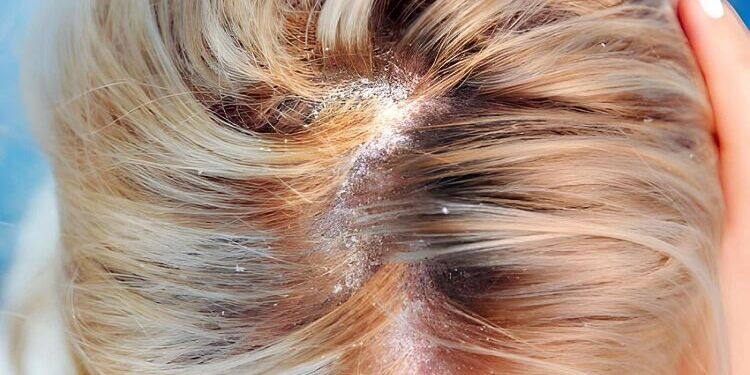

I spent an afternoon last spring doing something fairly tedious. I was pulling old r/tressless threads about tight scalp and hair loss, sorting them by year, trying to see if the theory had gotten stronger or weaker over time.
What I found wasn’t a trend. It was a stalemate.
Threads from 2019 read almost identically to threads from 2024. Same claim, same pushback, same unresolved argument, just with different usernames attached to it. One camp swears their scalp got noticeably looser after months of massage, right around when shedding slowed. Another camp calls that correlation dressed up as causation — thinning scalps naturally lose subcutaneous fat and blood vessel density as follicles shrink, so of course they’d feel tighter. Tension isn’t doing anything. It’s just what balding skin feels like.
Both sides cite real biology. Neither side seems to notice they might both be right, depending on the person.
That’s the part that pulled me in. Buried in one of the longer threads was a comment linking to a 2015 paper in PMC on mechanical stress and androgenetic alopecia. It had three replies in a thread with two hundred comments arguing past each other. So I read the actual paper.
It didn’t say tension causes baldness. It said something more careful, and more interesting: mechanical deformation in scalp tissue doesn’t damage skin on its own, but it may interact with androgen activity in a way that accelerates follicle remodeling that’s already underway. Not a trigger. A possible amplifier — and only in scalps where the hormonal process has already started.
That distinction is the whole article, if I’m honest. If you searched “tight scalp and hair loss,” you’re probably trying to figure out whether a physical sensation in your skin means something specific is happening to your follicles right now. The forums answer that with tribal loyalty instead of a mechanism. Most blog posts just repeat one side and move on to selling a massage device.
Let’s actually work through it.
1 Does a Tight Scalp Cause Hair Loss?
A tight scalp and hair loss are correlated in some research, but whether tension causes shedding or just accompanies it hasn’t been settled. The honest answer is that both directions of causation have some support, and they’re probably not mutually exclusive.
Here’s the split, laid out plainly instead of picked as a side.
The Tension Theory (What Proponents Claim)
The idea centers on the galea aponeurotica, a sheet of connective tissue stretching across the top of the skull. Proponents argue chronic tightness in the surrounding muscles compresses the small vessels feeding hair follicles, reducing micro-circulation and starving follicles of oxygen and nutrients over time.
It’s a plausible mechanism on paper. Reduced blood flow to a tissue that depends on a steady nutrient supply isn’t a wild claim. The gap is that plausibility isn’t the same as proof, and most of the supporting evidence online is observational — people noticing their scalp felt different, not controlled measurement of blood flow before and after tension developed.
The Counterargument (Correlation, Not Causation)
The opposing view, well represented in r/HairlossResearch, flips the sequence. As follicles shrink under androgen exposure, they need less blood supply. The surrounding vasculature naturally recedes to match. Tightness shows up as a downstream effect of shrinking follicles, not a cause of it.
This explains something the tension camp struggles with: why balding areas specifically (crown, hairline) tend to feel tighter than areas that stay full. If tension caused the loss, you’d expect a less predictable pattern.
2 Tight Scalp and Hair Loss: Cause, Symptom, or Coincidence?
Balding scalps often feel tighter mainly because the tissue underneath is genuinely changing, not because tension snuck in and started the process. That’s the piece missing from most explanations of this topic.
Why Balding Scalps Often Feel Tighter
As follicle miniaturization progresses, the scalp loses subcutaneous fat in affected areas and the surrounding connective tissue can develop mild fibrosis — a stiffening of tissue structure. Both changes would make skin feel less mobile under your fingers, independent of any muscular tension.
This is where the PMC paper’s framing earns its keep. It doesn’t claim tension is irrelevant. It suggests mechanical stress may interact with existing androgen activity and amplify a process already in motion, rather than kick it off in scalps that weren’t predisposed to begin with.
Practically, that means: if you have a family history of pattern hair loss and a tight scalp, tension might be worth addressing as one input among several. If you don’t have that background, a tight scalp on its own is a weaker signal than the internet suggests.
Worth being clear about: this is one paper’s interpretation, not a settled conclusion, and the amplifier idea hasn’t been tested directly in controlled human trials.
3 Scalp Tightness vs. Traction Alopecia: Two Different Mechanisms
Scalp tightness from tight hairstyles and scalp tightness tied to pattern hair loss are not the same problem, even though people often discuss them in the same breath. Confusing the two is where a lot of well-meaning advice goes wrong.
Traction alopecia is mechanical. Ponytails, braids, buns, and extensions pull directly on the hair shaft and follicle. The cause is identifiable, and according to Mayo Clinic, it’s reversible early on simply by loosening the style. The androgenetic alopecia tension question is murkier: correlational, still debated, without a single identified trigger.
Signs It’s Traction Alopecia
Thinning concentrated along the hairline, temples, or wherever tension from a style is highest
Tenderness or soreness specifically after wearing a tight style
Small bumps or visible breakage at the hairline before thinning becomes obvious
Pattern improves when the style changes
Signs It’s Something Else
Tightness feels diffuse across the whole scalp, not tied to a specific style
Thinning follows a classic pattern (crown, hairline recession) unrelated to how you wear your hair
Family history of pattern hair loss
Gradual progression over months to years, not tied to a styling change
| What People Expect | What the Evidence Shows |
|---|---|
| A tight scalp always means hair loss is starting | Tightness can appear with or without any hair loss; it’s not diagnostic on its own |
| Scalp massage will “unlock” follicles like a switch | Some studies show modest gains in hair thickness or count with consistent effort, not dramatic regrowth |
| Traction alopecia and pattern hair loss are the same tension problem | They’re separate mechanisms — one is mechanical pulling, the other a hormonal process tension may interact with |
| A tighter scalp than others predicts faster balding | Tension correlates with existing thinning in some research but hasn’t been shown to predict future loss |
4 How to Tell If Your Scalp Tension Is a Problem
A quick way to gauge your own scalp mobility is the pinch-and-glide test that keeps resurfacing across hair loss forums. It’s a rough self-check, not a diagnostic tool, so treat the result as one data point rather than an answer.
The Pinch-and-Glide Self-Check
Press your fingertips into the scalp and try to move the skin side to side over the skull, comparing thinning areas to fuller ones.
If the skin barely moves compared to areas with fuller hair, that’s worth noting. If it moves freely everywhere, tension is probably not your main variable.
When to Monitor vs. See a Dermatologist
5 What Actually Helps a Tight, Tense Scalp
Loosening tight hairstyles is the single highest-confidence fix available, since it addresses a mechanism (direct pulling) that’s actually established rather than debated. If your tightness is style-related, this alone often resolves it within weeks.
Loosening Hairstyles
Alternate tight styles with looser ones. Give the hairline recovery days between high-tension styles. If you notice tenderness immediately after a style, that’s your scalp telling you the tension is real and current, not theoretical.
Scalp Massage: What the Evidence Actually Supports
Manual scalp massage has some support for modest improvements in hair thickness with consistent practice over months, not the dramatic reversal implied by most product marketing. The mechanism is thought to involve muscle relaxation and mild circulation changes rather than anything more exotic.
I’d treat massage the way the r/tressless skeptics treat it — worth doing because it’s free and low-risk, not worth expecting to transform anything on its own. If you want the deeper breakdown of what the research actually shows, I’ve covered this in more detail in does scalp massage for hair growth really work, and the circulation angle specifically in how to improve scalp circulation.
If tightness and shedding are both new and you’re unsure which mechanism you’re dealing with, it’s also worth reading through what causes hair thinning before assuming tension is the explanation. And if hormonal shifts feel like a more likely trigger than tension, hormones and hair growth walks through that mechanism directly.
6 Tight Scalp and Hair Loss FAQ
How to fix tight scalp hair loss?
Start by identifying whether the cause is mechanical (tight hairstyles) or unclear (diffuse tightness with a pattern hair loss family history). Loosen styles first, since that’s the highest-confidence fix, and add consistent scalp massage as a low-risk secondary habit rather than a primary treatment.
Does tightness of scalp cause hair loss?
Evidence suggests tension is more likely to amplify an already-active hair loss process than to trigger one on its own. In scalps without a genetic predisposition, tightness alone is a weaker signal than forums often suggest.
What does a tight scalp indicate?
It can indicate mechanical tension from hairstyles, tissue changes from ongoing follicle miniaturization, or simply normal variation in scalp anatomy. Location and pattern matter more than the sensation itself.
What vitamin is lacking when hair is falling out?
Shedding is sometimes linked to iron or vitamin D insufficiency, but tightness itself isn’t a vitamin-deficiency symptom. If nutritional causes seem likely, that’s a separate question worth raising with a doctor who can test actual levels rather than guessing.
If your scalp tightness is severe, painful, or paired with rapid, unexplained shedding, that combination is worth a formal evaluation from a board-certified dermatologist rather than continued self-diagnosis. Everything above is meant to help you ask better questions in that appointment, not replace it.