

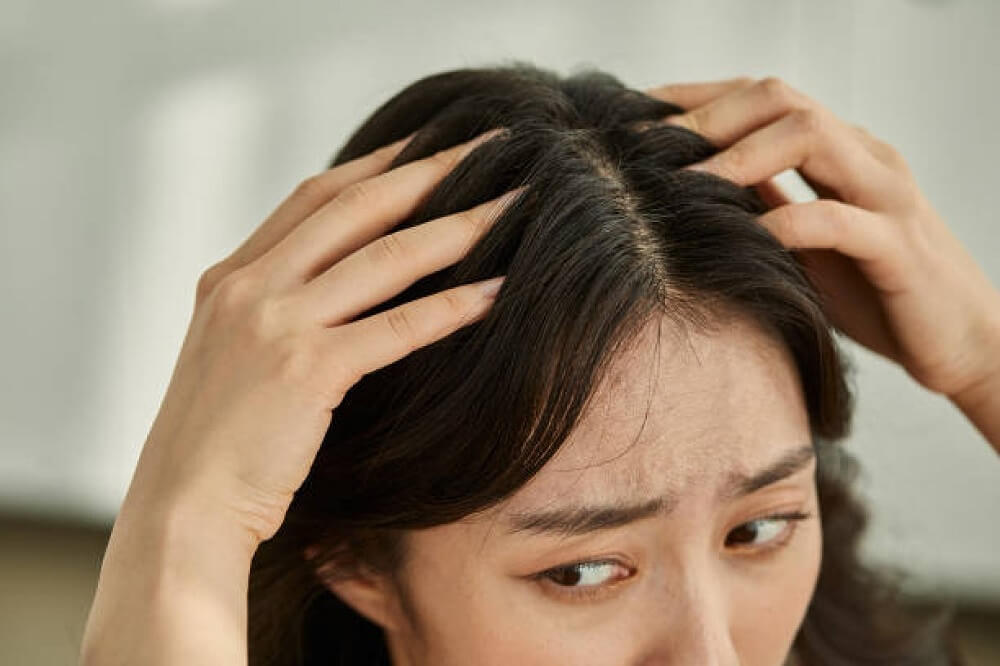
In my years of practice, I’ve seen scalp flaking get lumped into one box: “dandruff.” But that’s rarely the full story.
Flaking is really just a symptom — your scalp’s way of signaling that something in its natural balance has been disrupted, whether that’s moisture loss, an overgrowth of yeast, irritation from a product, or an underlying skin condition.
What makes this tricky is that flakes can look almost identical on the surface while having completely different root causes.
I always tell my patients: the size, color, and texture of the flakes, plus whether your scalp itches, burns, or feels tight, are the real clues. Below, I’ll walk you through the most common culprits so you can start identifying what’s actually happening beneath the surface.
The Science Behind Scalp Flaking
Your scalp renews itself constantly. Skin cells form deep in the epidermis, slowly migrate upward, and shed once they reach the surface — a cycle that normally takes around three to four weeks and goes completely unnoticed.
Flaking happens when this rhythm gets thrown off. Sometimes cell turnover speeds up dramatically, and skin cells reach the surface before they’ve fully matured. These immature cells don’t separate cleanly the way healthy ones do. Instead, they clump together in visible clusters — what you see as flakes.
In other cases, the issue isn’t turnover speed at all. It’s moisture. When the scalp’s outer barrier loses water, skin can crack and lift away in thin, dry pieces.
I’ve found that understanding which mechanism is driving your flaking changes everything about treatment. Speeding up a cycle that’s already too fast, for instance, only makes flaking worse.
8 Common Scalp Flaking Causes
1. Dry Scalp
Low oil production, harsh weather, or hot showers stripping natural moisture.
2. Dandruff (Seborrheic Dermatitis)
Overgrowth of Malassezia yeast triggering rapid skin cell turnover. The most common cause I see in clinic, often worse in winter.
3. Product Buildup
Styling gels, dry shampoo, or heavy oils trapping dead skin against the scalp.
4. Scalp Psoriasis
An autoimmune condition causing thick, silvery scales — often mistaken for severe dandruff.
5. Contact Dermatitis
Irritation or allergic reaction to shampoo, dye, or styling ingredients.
6. Fungal Infections
Tinea capitis and similar infections causing scaling, sometimes with hair loss.
7. Eczema
Chronic skin condition flaring up on the scalp, especially in sensitive or atopic skin.
8. Infrequent Washing
Allowing oil, sweat, and dead cells to accumulate and flake off in clumps.
How to Tell Which Cause You Might Have
When I first started digging into scalp health, my own thinning hair and a shelf full of products that didn’t work taught me one thing fast: guessing never solves the problem. You need to actually look at what your scalp is telling you.
Start by examining the flakes themselves. Small, white, dry flakes that scatter easily usually point to a simple dry scalp. Larger, yellowish, oily flakes that cling to the hair shaft are more characteristic of dandruff or seborrheic dermatitis. Thick, silvery-white scales with well-defined edges, especially if they’re slightly raised, often suggest psoriasis rather than dandruff.
Next, pay attention to sensation. Itching alone is common across nearly every cause, but burning, stinging, or tightness right after using a product usually signals irritation or contact dermatitis, not a chronic skin condition.
Finally, consider timing and pattern. Flaking that worsens with stress, cold weather, or infrequent washing tends to be lifestyle-driven. Flaking that persists regardless of what you change, or comes with redness, hair thinning, or sores, is when I’d stop self-diagnosing and bring in a dermatologist.
Dandruff vs Dry Scalp
This is probably the most common mix-up I see. People assume any flaking means dandruff, reach for an anti-dandruff shampoo, and end up making things worse. So let’s clear this up properly.
The core difference comes down to cause. Dry scalp happens when your skin simply isn’t producing enough oil, or is losing moisture too fast — from cold weather, hot showers, or harsh shampoos. Dandruff, on the other hand, is driven by an overgrowth of Malassezia, a yeast that naturally lives on everyone’s scalp but flares up in some people, triggering inflammation and rapid skin cell turnover.
Here’s how to tell them apart at a glance:
| Feature | Dry Scalp | Dandruff |
|---|---|---|
| Flake appearance | Small, white, dry | Larger, yellowish, oily |
| Scalp feel | Tight, dry, sometimes flaky elsewhere on body | Greasy, itchy |
| Itch level | Mild | Moderate to intense |
| Common triggers | Cold weather, harsh products, over-washing | Yeast overgrowth, stress, hormonal shifts |
| Hair type affected | Any, often drier hair types | Often oilier scalps |
| Best first step | Hydrating shampoo, less frequent washing | Anti-fungal shampoo (zinc pyrithione, ketoconazole) |
The mistake I see most often: treating dry scalp with a strong anti-dandruff shampoo. Many of these contain ingredients that are too stripping for an already dehydrated scalp, which can make flaking worse, not better. If your scalp feels tight and dry rather than oily and itchy, start with hydration first.
When Scalp Flaking May Signal Something More — And When to See a Dermatologist
Most scalp flaking I come across is manageable with the right shampoo and a little patience. But in my decade of digging through clinical research and talking to people about their scalp struggles, I’ve learned to recognize when flaking is waving a bigger red flag.
Certain signs tell me a medical condition, not just dryness or dandruff, is at play:
- Thick, silvery scales with defined borders — a hallmark of scalp psoriasis, especially if similar patches show up on elbows or knees
- Redness, swelling, or warmth around the flaking area, which can point to infection or severe dermatitis
- Patchy hair loss alongside scaling, sometimes a sign of fungal infection or scarring conditions
- Flaking that doesn’t respond to anything — months of trying different shampoos with zero improvement
- Open sores, crusting, or oozing, which should never be self-treated
I’m not a dermatologist, and I’ve never claimed to be. What I am is someone who’s spent years learning where the line sits between “try this at home” and “please go see a professional.” That line matters, because YMYL topics like this aren’t places for guesswork.
If you’ve tried consistent, appropriate treatment for 4-6 weeks with no change, or if you notice any of the warning signs above, it’s time to book a dermatology appointment. A trichologist or dermatologist can do a scalp biopsy or fungal culture if needed — something no shampoo aisle can offer you.
Key Takeaways
- Scalp flaking isn’t one condition — it’s a symptom with several possible root causes, from simple dryness to dandruff, psoriasis, or fungal infection
- Flake appearance, scalp sensation, and timing are your best clues for narrowing down the cause
- Dry scalp and dandruff are the two most commonly confused conditions, but they need opposite treatment approaches
- Persistent flaking that doesn’t respond to consistent treatment, or comes with redness, sores, or hair loss, warrants a dermatologist visit
- Self-diagnosis is a useful starting point, not a final answer — especially for YMYL health decisions
Frequently Asked Questions
References
- American Academy of Dermatology — Seborrheic Dermatitis Overview
https://www.aad.org/public/diseases/a-z/seborrheic-dermatitis-overview
Best for: the Dandruff section, distinguishing dandruff from seborrheic dermatitis - National Psoriasis Foundation / DermNet — Seborrheic Dermatitis Causes and Treatment
https://dermnetnz.org/topics/seborrhoeic-dermatitis
Best for: the “8 Common Causes” section, supporting the Malassezia yeast explanation - PMC (National Library of Medicine) — Seborrheic Dermatitis and Dandruff: A Comprehensive Review
https://pmc.ncbi.nlm.nih.gov/articles/PMC4852869/
Best for: “The Science Behind Scalp Flaking” section, supporting the cell turnover and pathogenesis explanation - Cleveland Clinic — Seborrheic Dermatitis: Symptoms, Causes & Treatment
https://my.clevelandclinic.org/health/diseases/14403-seborrheic-dermatitis
Best for: the “When to See a Dermatologist” section, supporting when professional treatment is needed