
Aloe vera for scalp care gets recommended for almost everything. Dry scalp, flaking, itchiness, oily roots, even hair growth.
But go looking for real feedback, not brand copy, and something odd shows up. One person says it cleared their flaking in days. Another says it left their scalp tighter and itchier than before they started.
Same gel. Same basic routine. Opposite results.
I noticed this pattern while reading through scalp forums for something else entirely, and it stuck with me. If aloe vera worked the way most articles describe it, moisturizing, soothing, gentle, these two outcomes shouldn’t both exist. Somebody had to be doing something wrong.
Except the more threads I read, the less that held up.
So the question I actually want to answer here isn’t whether aloe vera works for scalp problems. It’s a narrower one, and it turns out to matter a lot more: which scalp problem do you actually have? Because that answer changes everything about whether aloe helps you or works against you, and it’s also the answer to whether it’s okay to put aloe vera on your scalp in the first place.
What’s Actually in the Gel
Once the forum split stopped making sense to me, I did what I usually do when a pattern won’t resolve. I went back to what’s actually in the gel.
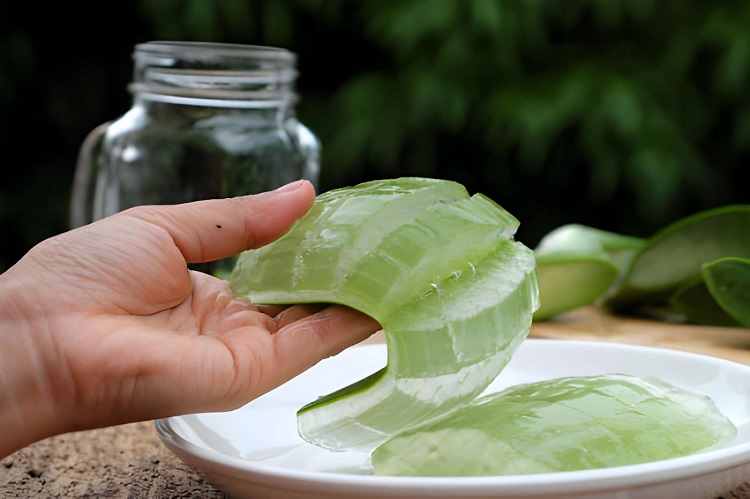
Aloe vera contains polysaccharides, enzymes, fatty acids, and compounds like bradykinase and salicylic acid. Most of what gets written about it stops there, treating that list as a single unified argument for hydration. It isn’t.
Here’s the cleaner way to say it: aloe vera gel hydrates the scalp through polysaccharides and moisture-binding sugars, while its salicylic acid and mild astringent properties simultaneously draw moisture out and calm surface inflammation. Both things are true at once. That’s not a contradiction in the plant. It’s a contradiction in how most articles describe it.
The enzymes matter here too. They’re part of why aloe can break down sebum and product buildup, which is genuinely useful for someone dealing with oily buildup. But that same enzymatic, mildly astringent action isn’t neutral for every scalp. On skin that’s already dry or barrier-compromised, adding something that pulls moisture even slightly can tip things the wrong way.
I think this is the piece almost every “benefits of aloe vera” list skips. They frame the plant as purely soothing and hydrating, full stop, no caveats. But hydration and astringency aren’t opposites fighting each other inside the gel. They coexist, and which one shows up more strongly in your results depends on what your scalp needed in the first place.
That’s the thread I followed next.
Why the Same Gel Produces Opposite Results
This is where the two camps stopped looking like a coincidence to me.
Dry scalp and dandruff get talked about as if they’re the same problem with different names. They’re not. Dry scalp is usually a moisture and barrier issue, nothing more sinister than that. Dandruff, especially the seborrheic dermatitis kind, involves an overgrowth of Malassezia, a yeast that lives on everyone’s scalp but multiplies when conditions favor it, oil, warmth, moisture among them.
Aloe vera doesn’t know the difference. It just does what its chemistry does.
| Category | Simple Dry Scalp | Fungal/Seborrheic Flaking |
|---|---|---|
| Common symptom | Tight, flaky, no odor | Greasy flakes, itch, sometimes redness |
| What aloe does | Adds moisture, mild soothing | Adds sugars/moisture fungus can use |
| Reddit outcome | “Cleared up in days” | “Got itchier, more oily” |
| Better first step | Aloe as light moisturizer | Antifungal shampoo, dermatologist input |
On a simply dry scalp, that moisture and mild soothing effect is genuinely helpful. On a scalp where Malassezia is already overgrown, adding sugars and extra moisture can hand the yeast more to work with. Same gel, opposite outcome, and now it made sense why both camps were reporting accurately.
The 1998 study that gets cited constantly, the one behind most “aloe cures dandruff” claims, actually looked at inflammation reduction. It didn’t establish that aloe addresses the fungal cause of seborrheic dermatitis. That’s a meaningful gap, and it’s one almost no article bothers to point out.
I want to be direct about where this leaves things. If your flaking comes with persistent itch, redness, or an oily texture that won’t resolve with basic care, aloe vera is not the fix. That pattern deserves an antifungal shampoo and, if it doesn’t improve, an actual dermatologist, not another home remedy. Aloe can sit alongside that kind of routine as a mild adjunct. It shouldn’t replace a real diagnosis.
How to Tell Which One You Have
Once I understood why the forum results split the way they did, the next question was practical. How does someone actually tell which category they’re in, without a dermatologist appointment as step one?
I started asking myself three things whenever a reader described flaking or itchy scalp causes to me. They turned into a rough self-check.
First, look at the flakes themselves. Dry and small usually points toward simple dryness. Greasy, clumped, or yellowish flakes lean toward the fungal, seborrheic pattern instead.
Second, check what else is happening. Mild tightness with no real itch is one thing. Persistent itch, redness, or a scalp that feels oily within a day of washing is another. That second combination is the flaky scalp vs. dandruff distinction that actually matters.
Third, give it a week. Basic care, gentle shampoo, less product, no new irritants, and see what changes. Simple dryness tends to respond fast. A fungal pattern usually doesn’t budge much, or gets worse.
A short checklist makes this easier to run through on your own scalp:
None of this replaces an actual diagnosis. What it does is narrow things down enough to know whether aloe vera is a reasonable thing to try first, or whether you’re looking at something that needs more than a plant gel and some patience.
How to Actually Use It (If You’re a Good Candidate)
If your flakes are dry, your scalp isn’t oily or inflamed, and basic care hasn’t fixed things after a week or two, aloe vera is worth an actual trial. Here’s how I’d run it.
How to use aloe vera for scalp care starts with one non-negotiable step: patch test the gel on your inner wrist and wait 24 hours before it ever touches your scalp. Skip this and you’re guessing.
From there, the routine is simple.
That last point matters more than it sounds like it should. A lot of product listings frame daily use, or even overnight application, as the ideal aloe vera gel scalp routine. That’s backwards for a lot of people. Overuse is exactly what pushed several forum users toward the drier, more irritated results I read about earlier, the ones that seemed to contradict the success stories until the dryness-versus-fungal distinction explained why.
Watch how your scalp responds after the first two or three applications. If it feels tighter or itchier than before you started, that’s your answer, stop and reconsider whether you’re actually dealing with simple dryness at all. Tolerance varies person to person, so treat this as a starting point to adjust from, not a fixed prescription.
Where Aloe Falls Short, and What Reddit Gets Wrong
Going back to where this started: those Reddit threads weren’t full of people lying about their results, and they weren’t full of people applying aloe wrong either. Both camps were describing their own scalps accurately. They just assumed their experience generalized.
That’s the real disadvantage of aloe vera for hair and scalp use, and it has nothing to do with the plant itself. It’s the habit of treating one person’s win or loss as a universal verdict. Someone with fungal-driven flaking tries aloe, it doesn’t help, they post that it’s overrated. Someone with plain dryness tries it, it works, they post that it’s a miracle fix. Neither is wrong about their own scalp. Both are wrong about everyone else’s.
The aloe vera side effects hair users actually report, tightness, increased itch, more oil, aren’t random. They show up in a specific subset of cases, mostly where the underlying issue was never simple dryness to begin with.
No ingredient is universally good or bad. That framing sells better than the accurate version, but it doesn’t hold up once you look at what’s actually driving someone’s flaking. The condition underneath determines the outcome. The ingredient’s popularity has nothing to do with it.
Frequently Asked Questions / PAA
Is it okay to leave aloe vera on scalp overnight?
No, leaving raw aloe vera gel on your scalp overnight is generally not recommended. While it seems like longer contact equals deeper hydration, overnight application allows aloe’s natural astringent properties and enzymes to break down skin lipids, leaving your scalp tighter, itchier, and excessively dry. Limit application to 20–30 minutes before rinsing thoroughly with a mild shampoo.
Can aloe vera cure scalp infections?
No, aloe vera cannot cure fungal or bacterial scalp infections. While its polysaccharides and bradykinase temporarily soothe surface inflammation, aloe lacks the active antifungal agents required to eradicate underlying pathogens like Malassezia yeast (the root cause of seborrheic dermatitis). Fungal-driven flaking requires a targeted antifungal shampoo (like Ketoconazole) or a prescription from a dermatologist.
What are the main disadvantages of aloe vera for hair and scalp?
The primary disadvantage of aloe vera is its unpredictability on compromised scalps. On dry scalps, it hydrates; however, on barrier-compromised or fungal-prone scalps, its natural sugars can feed yeast while its mild astringents strip necessary surface moisture. This often leads to increased flaking, severe itchiness, and product buildup if used daily or applied incorrectly.
Where This Leaves You
None of this required a lab or a dermatologist visit to figure out. It just required asking which scalp problem was actually present before copying a routine off a product label.
That’s the shift worth taking from this whole piece. Not “does aloe vera work,” but which category you’re in first. Run through the checklist from earlier, texture of the flakes, whether itch or oil shows up alongside them, how things respond after a week of basic care. That answer tells you more than any review thread will.
Aloe vera isn’t a universal fix or a universal disappointment. It’s a tool that works for one specific problem and works against another. Knowing which one you have is the whole game.