

Table of Contents
A friend texted me a few weeks back, half-joking, half-worried: “Is it normal for your scalp to just… hurt? Like, for no reason?” No rash. No flaking. No bald patch. Nothing she could point to and say, “there, that’s it.” She’d already done what most people do — read the dandruff articles, tried a detox shampoo, cut back on hair ties, waited for stress to “calm down.” None of it changed anything, because none of it was aimed at the right question.
Here’s the question I actually asked her back, and it’s one worth running on yourself before you read another word: does it hurt in one exact spot when you press it, or does your entire scalp feel tender the moment you touch it — even in places that have no obvious reason to hurt?
That single answer splits her case, and most cases, into two almost unrelated problems. It’s also the fork most articles rank for “scalp pain causes” without ever asking the reader to find on their own.
1 Scalp Pain Causes: Key Takeaways
- Localized pain (one exact spot) and diffuse pain (whole scalp, on touch) point to almost entirely different causes — figure out which one you have first.
- Normal-looking skin doesn’t rule out real pain. Trichodynia causes genuine soreness with nothing visible underneath.
- Tight hairstyles can cause pain a full day later, not immediately — the delay confuses people into ruling this out too fast.
- One combination — new pain, age 50+, jaw or vision symptoms — means calling a doctor this week, not “eventually.”
2 Why Most Scalp Pain Advice Gets the Order Wrong
I’ll say this plainly: most scalp pain articles list the same six causes in the same order, and that order is part of the problem. Dandruff and temporal arteritis end up sitting next to each other as if they’re equally likely, equally urgent, equally worth your attention. They’re not. One is uncomfortable. The other, in the wrong circumstances, is an emergency.
I should be clear about where I fit into this. I’m not a doctor, and I wasn’t treating my friend for anything. She came to me because I read scalp research obsessively, and her symptoms didn’t match the tidy lists she’d already found. So I went digging — through studies, case reports, dermatology literature — to figure out why. This article is what came out of that process, not a professional diagnosis dressed up as one.
3 The Misconception That Wasted Weeks of Her Time
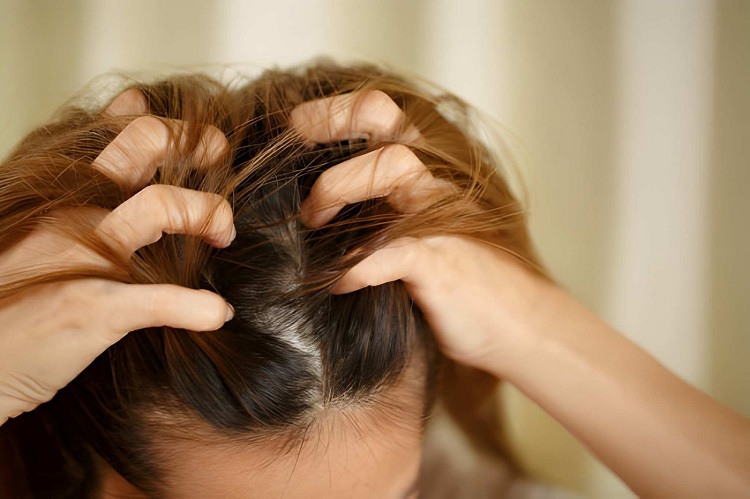
Here’s what nobody told her: you can have real, physical scalp pain and completely healthy skin at the same time. That combination sounds contradictory, which is exactly why it trips people up.
We’re wired to assume pain means damage — a rash forming, buildup clogging something, an infection taking hold. So when none of that shows up, the instinct is to keep hunting for a hidden skin problem instead of questioning the assumption itself.
This is what trichodynia actually is: scalp pain or tenderness with no visible dermatological cause. The leading explanations in the literature point to nerve sensitization and its frequent overlap with telogen effluvium — a temporary hair-shedding phase often triggered by stress, illness, or hormonal shifts. The nerves around the follicles seem to become more reactive during that shedding process, which can produce real pain without a single visible symptom to show for it.
That’s why my friend’s shampoo changes went nowhere. She was treating a skin problem she didn’t have. The detox shampoo, the sulfate-free switch, the scalp masks — all reasonable moves if buildup or irritation were the cause. None of it touches nerve sensitization, because it isn’t designed to.
This is where I’ll push back on something forums repeat constantly: “just switch your shampoo” as a default response to scalp pain. It’s not bad advice in general. It’s actively unhelpful advice for this specific pattern, among the many causes of scalp pain, and repeating it without that distinction just extends how long people stay stuck solving the wrong problem.
4 The Tension Cluster: One Mechanism, Not Four Separate Causes
Most lists treat tight hairstyles, traction, tension headaches, and stress as four unrelated causes of scalp pain. I don’t think that’s accurate.
They’re one mechanism wearing different outfits — all of them compress or pull on the galea aponeurotica, the sheet of fascia stretched across the top of the skull that connects your forehead muscles to the muscles at the back of your neck.
Pull on one end — a tight bun, a slicked-back ponytail, hours of tension from stress — and the whole sheet tightens. That’s why a stress headache and a “my ponytail was too tight” ache can feel almost identical. They’re not separate scalp pain causes so much as the same fascia responding to different triggers.
This is also where my friend’s case got confusing for her. She’d worn her hair in a tight bun on a Tuesday, and the soreness didn’t show up until Wednesday. She assumed that ruled the hairstyle out — if it were really the cause, wouldn’t it hurt immediately?
Not necessarily. Fascia doesn’t always react in real time. Sustained tension can trigger inflammation and tenderness that builds over hours, sometimes peaking a full day later. Readers expecting instant cause-and-effect often dismiss the tension cluster too early, right when it’s actually the most likely explanation.
5 What Causes Scalp Pain When There’s Actually Something Visible
Everything so far has been about pain with no skin changes. But plenty of people asking what causes scalp pain do have something visible — they just don’t know how to read it. And most articles don’t teach you to read it either. They name five conditions and move on, leaving you to match photos on a screen to whatever you’re feeling on your own head, which is a much harder task than it sounds.
So instead of naming conditions and hoping you recognize yours, it helps to think in terms of texture and location first.
Greasy, yellowish flaking near the hairline feels different from dry, silvery scaling on the crown. A cluster of small, tender bumps reads differently than one large sore patch. Burning after a new hair dye is a different story than pain after a day at the beach with no hat.
Here’s how that logic breaks down:
| Cause | Texture/Feel | Typical Location | Distinguishing Clue |
|---|---|---|---|
| Seborrheic dermatitis | Greasy, flaking, mild itch-pain overlap | Hairline, behind ears, crown | Flakes look yellowish and oily, not dry |
| Psoriasis | Thick, dry, scaly plaques that crack | Crown, nape, scattered patches | Scaling looks silvery-white, may bleed slightly if picked |
| Folliculitis | Small, tender, sometimes pus-filled bumps | Anywhere hair grows, often scattered | Bumps cluster around individual follicles |
| Contact dermatitis | Burning, stinging, sometimes swelling | Wherever product touched skin | Onset tied closely to a new dye, shampoo, or styling product |
| Sunburn | Surface tenderness, tight or hot feeling | Areas with thin hair or exposed part lines | Clear timeline tied to sun exposure, no gradual buildup |
None of these need a mirror to identify — just attention to where it is, what it feels like, and what changed right before it started.
6 What Almost Got Missed: Nerve and Vascular Pain
This is the section I think matters most, and it’s usually the one buried last — item six or seven on a list of six or seven causes, right after dandruff and stress. That placement isn’t neutral. It tells readers, implicitly, that this cause deserves the same amount of attention as a flaky scalp. It doesn’t.
Occipital neuralgia is inflammation or irritation of the nerves running from the base of the skull up through the scalp. It tends to produce sharp, shooting, or burning pain rather than dull tenderness, sometimes triggered by neck tension or pinched nerves rather than anything happening on the skin itself. Uncomfortable, sometimes debilitating, but not an emergency.
Temporal arteritis is different, and this is the one I’d genuinely want every reader over 50 to recognize by name. It’s an inflammation of the arteries near the temples, and it shows up as localized scalp tenderness — often described as pain when brushing hair or resting on a pillow — in a fairly specific group: adults over 50, more often women. On its own, that description could pass for a dozen other causes.
What changes the picture is what comes with it. Jaw pain while chewing. Vision changes, even brief ones. Those two symptoms alongside new scalp tenderness in someone over 50 aren’t a coincidence worth Googling later. Temporal arteritis left untreated can lead to permanent vision loss, because the inflamed arteries can affect blood flow to the eye.
I don’t say this to alarm anyone experiencing ordinary tension pain. I say it because this is exactly the cause that gets lost when it’s listed last, treated as equally likely as everything above it, when in reality it’s the one combination on this entire page that justifies calling a doctor this week.
7 The Autoimmune and Hair-Loss Overlap
Somewhere in our back-and-forth, my friend mentioned almost as an afterthought that she’d noticed a bit more hair in her brush lately. On its own, that’s easy to dismiss — everyone sheds more some weeks than others. But paired with scalp pain, it’s worth pausing on rather than filing away.
Alopecia areata, in its early inflammatory phase, can produce tenderness or soreness in the scalp before any noticeable patch of hair loss appears. The immune system attacking hair follicles seems to generate localized inflammation, and pain can be an early signal rather than a side effect that shows up later. Lupus can involve the scalp similarly, with inflammation sometimes preceding more recognizable skin changes.
I want to be careful here, because this is where evidence gets thinner and more conditional than the mechanical causes above. It’s a plausible connection, not a confirmed one in every case, and shedding plus pain doesn’t mean autoimmune activity is definitely happening.
That said, it’s exactly the combination I flagged for my friend to mention to her doctor — not because I suspected anything specific, but because it’s the kind of detail easy to leave out of a conversation unless someone tells you it might matter.
8 How I Actually Reasoned Through Her Case
I want to walk through this the way it actually happened, not the cleaned-up version, because the reasoning matters more than the conclusion.
First question: one spot or the whole scalp? She said whole scalp, tender pretty much everywhere she touched. That already ruled out folliculitis and contact dermatitis in my head — those tend to stay localized to wherever the irritation started.
Second: any visible skin change? She sent me a photo. Nothing. No flaking, no redness, no bumps. That ruled out seborrheic dermatitis and psoriasis, both of which announce themselves visually before the pain gets bad.
Third: age and symptom combination. She’s in her early thirties, no jaw pain, no vision changes. That took temporal arteritis off the table almost immediately — not impossible in theory, but the age and symptom profile just didn’t fit, and I said so plainly rather than hedging out of caution I didn’t actually feel.
Fourth: any recent hairstyle changes or stress spikes? She mentioned wearing her hair up more than usual for a stressful work week. That’s a real candidate — but it didn’t fully explain diffuse, whole-scalp tenderness on its own, since tension pain usually concentrates more where the pull was.
Fifth, the detail that shifted my thinking: the shedding she’d mentioned almost in passing. Diffuse pain, no skin changes, plus increased shedding pointed toward trichodynia linked to a telogen effluvium phase, with the autoimmune possibility worth ruling out rather than assuming.
That’s the actual order I worked through it in. Here’s the same logic, condensed so you can run it on yourself:
Quick Self-Check
No single checked box gives you an answer. But the pattern across all five tells you which section above to take seriously first.
9 Red Flags
Some patterns need a doctor, not another article. No hedging here:
- Sudden scalp pain with vision changes or jaw pain, especially over age 50. This is the temporal arteritis combination. Don’t wait to see if it passes.
- Fever alongside scalp pain. Suggests infection or systemic inflammation, not a mechanical or cosmetic cause.
- Pain lasting beyond two weeks with no clear trigger. Tension and trichodynia usually ease once the trigger resolves. Persistent pain past that window deserves an exam, not more home remedies.
- Pain accompanied by visible lesions, open sores, or spreading redness. These can signal infection that needs treatment beyond scalp care products.
If any of these match what you’re experiencing, the right move is a doctor’s appointment, not more searching. Everything else in this article is meant to help you understand what’s happening — not replace a diagnosis.
10 What Her Scalp Pain Actually Turned Out to Reveal
My friend took this reasoning to her doctor rather than a conclusion — the shedding, the diffuse tenderness, the timeline, all of it laid out as questions rather than a self-diagnosis. That’s where her part of this story ends, at least as far as I know it, and I’d rather leave it there than invent a tidy resolution.
If you take one thing from everything above, let it be the fork from the very first section: figuring out whether your pain is localized or diffuse before you go looking for a cause. Almost every path through this article branches from that single distinction. Among the many scalp pain causes covered here, that one question does more to narrow things down than any list ever could.
11 FAQs
Yes, and it’s more common than people expect. Trichodynia linked to a telogen effluvium phase often follows the same rhythm as the shedding itself — flaring for a few weeks, easing, sometimes returning. That inconsistency is part of why it’s so easy to dismiss as “nothing,” when it’s actually a recognizable pattern worth tracking rather than ignoring.
It can be, though this isn’t well studied specifically for scalp pain. Tension-related causes often feel worse at night simply because pressure from a pillow adds direct contact to an already sensitive area, and reduced daytime distraction makes pain more noticeable. It’s not a distinct cause on its own — more a timing effect layered on top of whatever’s already happening.
Yes. Stress alone can tighten the muscles connected to the galea aponeurotica, producing the same tension-cluster pain described earlier even with hair left completely loose. The hairstyle and the stress response aren’t separate triggers — they’re two ways of reaching the same mechanical tension.
It depends on the cause, which is part of why generic advice to “wash more” or “wash less” rarely helps. Warm water can temporarily ease tension-related tightness, while hot water or harsh shampoos can aggravate contact dermatitis or sunburned skin. There’s no universal answer here — it depends on which cause from earlier actually fits your situation.
Often, yes. That exact location is frequently sun exposure, since the part line is where scalp skin gets the most direct UV exposure over time. It can also indicate friction from repeated brushing or styling in that same spot, which is worth ruling out before assuming a medical cause.