
The email that got me started on rice water for scalp use came from a reader who’d already tried three different methods before writing to me.
She started with the fermented version, because that’s what showed up first in her search results and what most of the videos pushed as the “real” method. Three days on the counter, strained, applied straight to a dry, itchy scalp before bed.
Within a week her scalp felt tighter and more irritated than before she started, not less. So she switched to plain soaked water, no fermentation, same overnight application. That calmed things down, but she noticed a waxy buildup at her hairline by day four, like the starch wasn’t rinsing out completely. Her third attempt was diluting it half with water and rinsing after twenty minutes instead of leaving it in overnight. That’s the one that actually helped.
What struck me wasn’t that she landed on something workable. It’s that she stumbled into the right combination through trial and error, in an order that happened to work. Someone running the same three experiments in a different sequence might have quit after the fermented version irritated their scalp and never gotten to the version that helped.
Three attempts, three variables, one that worked. That’s not luck. That’s a pattern worth tracing.
1 Rice Water for Scalp: Same Bottle, Two Different Liquids
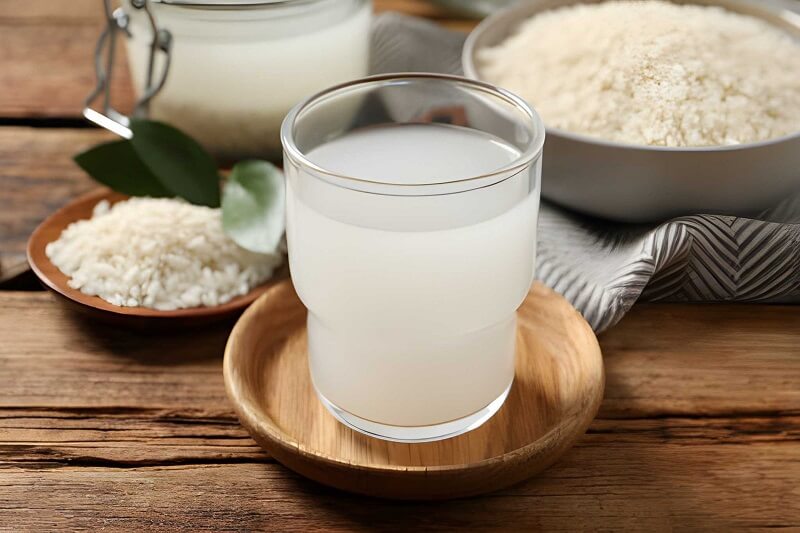
Here’s something that rarely gets pointed out. Soak rice for twenty minutes, strain it, and you get a mild, near-neutral liquid.
Let that same rice sit for 72 hours and ferment, and you get something with a noticeably lower pH, active microbial growth, and a much higher concentration of dissolved starch. Both get poured into the same jar labeled “rice water.” Both get recommended in the same breath online.
But they’re not the same liquid touching your scalp. One is closer to plain water with a trace of nutrients. The other is closer to a mild acid wash with a living microbial component. If fermented rice water for scalp use behaves differently than the soaked version, and it does, then treating them as interchangeable is where most of the confusion starts.
2 Why Hair Advice Doesn’t Transfer to Scalp Skin
Most of what’s written about rice water for scalp health is actually written about hair. Healthline, Medical News Today, Cleveland Clinic, all of them center on inositol, an ingredient that’s been shown to penetrate damaged hair fiber and patch up structural gaps in the keratin. That’s a real finding, and it’s relevant if you’re worried about split ends or brittle strands.
But a hair strand is dead tissue. No blood supply, no living cells, no biological response to what touches it. Pour rice water on hair and the only question is whether the compounds bind to keratin.
A scalp is nothing like that. It’s living skin, with follicles, sebaceous glands producing oil at different rates depending on the person, and a microbial population that shifts in response to whatever sits on it. Inositol binding to keratin tells you nothing about how that same liquid interacts with skin barrier function or follicle-level bacteria.
I think this is where most of the confusion around rice water actually starts. People read a hair study, apply the liquid to their scalp, get an inconsistent result, either irritation or nothing at all, and conclude the ingredient doesn’t work. It’s not that simple. The ingredient was never studied on the surface they applied it to.
This is also why individual results vary so widely, and why one article recommending it and another discouraging it can both be technically accurate. They’re just often talking about two different surfaces without saying so.
3 Fermentation Changes the Chemistry, Not Just the Smell
Fermentation gets treated online as an upgrade, like letting rice water sit longer just makes it stronger. That’s not quite what’s happening.
As rice water ferments, naturally occurring bacteria break down starches into lactic acid and other organic acids. The liquid’s pH drops, sometimes into a range close to 4, compared to the near-neutral pH of a short soak.
That shift is the whole appeal for people chasing a “deeper” treatment. It’s also, I’d argue, the reason fermentation is riskier than most articles admit.
Scalp skin maintains its own acid mantle, a thin protective layer sitting around pH 4.5 to 5.5 that helps regulate resident bacteria and keep the barrier intact. When I traced back the reader from earlier in this piece, the one whose fermented rice water left her scalp tighter and more irritated within a week, the acidity shift seemed like the most plausible explanation. Her scalp barrier was already reactive from flaking and itch. Introducing a more acidic liquid, even a mild one, may have pushed things further off balance rather than calming them.
I want to be careful here. Nobody has run a controlled study on fermented rice water applied specifically to scalp skin, so I can’t claim this mechanism as proven. What I can say is that the pH shift is measurable and well-documented in fermentation research generally, and it lines up with what she experienced.
There’s a separate question worth raising for anyone dealing with oiliness: is rice water good for oily scalp specifically? Fermentation increases microbial activity in the liquid itself, and an oily scalp already hosts more sebum for that same class of skin bacteria to interact with. Whether that combination helps or aggravates oil production isn’t established either way.
My honest read is that it’s the least predictable scenario of the three prep methods, which makes it a poor starting point for anyone testing this for the first time.
4 Rice Water Prep Methods Compared
Laying out the three methods side by side makes the tradeoffs easier to weigh than reading them in paragraph form.
| Method | Prep time | pH/acidity | Best suited for | Main risk |
|---|---|---|---|---|
| Plain soak (20–30 min) | Fast | Near-neutral | Dry, sensitive scalps | Minimal, but weak effect |
| Fermented (24–72 hrs) | Slow | More acidic | Oily scalps, testing tolerance first | Irritation, odor |
| Diluted + short rinse | Fast | Neutral, weaker concentration | First-time users, sensitive skin | Least buildup risk |
None of these methods is universally “better.” They’re suited to different starting points, and the mismatch between method and scalp type is usually what turns a mild experiment into an irritated one.
5 The Buildup Problem Nobody Mentions
Buildup gets discussed constantly in hair-care content, but almost never as a scalp-specific issue, and that gap is worth closing.
A hair strand is smooth and exposed, hanging in open air. Starch-rich liquid dries on it and mostly rinses away with the next wash. Scalp skin isn’t built the same way. It’s uneven, covered in fine vellus hairs, and dotted with follicle openings, none of which rinse as cleanly as a hanging strand does.
The reader from earlier who tried the plain soaked version noticed a waxy residue collecting right at her hairline by day four. That’s not a random reaction. Starch can settle into the small crevices around follicle openings and along the hairline, spots where rinsing is naturally less thorough, and repeated applications add to that layer rather than clearing it out each time.
This matters more than it sounds like it should. Residue sitting near a follicle opening isn’t neutral. It can trap oil and dead skin cells underneath it, which is a reasonable explanation for why some people report increasing irritation after a few uses, even when the rice water itself isn’t harsh on its own.
My guess is this gets skipped because most rice water content is written from a hair-care angle, where buildup is a minor annoyance solved by the next wash. On scalp skin, it behaves differently, building quietly until someone notices things feel worse than when they started.
6 Who Should Be Cautious — Oily, Flaking, or Sensitized Scalps
Rice water isn’t a one-size-fits-all experiment, and pretending otherwise is where a lot of generic advice falls apart.
Is rice water good for oily scalp use? Probably the trickiest case of the three. An oily scalp already has more sebum for starch residue to combine with, and the buildup issue from the last section compounds faster here than on drier scalp types. Add fermentation’s higher microbial activity into an already oil-rich environment, and you’ve got two variables working against you at once instead of one. If someone with an oily scalp wants to try this at all, I’d start with the diluted, short-rinse method, not the fermented version most videos recommend.
Is rice water good for dry scalp, especially one that’s already flaking? This is where prep method matters more than almost anywhere else. Plain soaked rice water tends to be gentler here, since it skips the acidity shift that fermentation introduces. A flaking scalp usually means a compromised barrier already, and pushing a more acidic liquid onto that barrier is a reasonable way to tip mild irritation into something worse. The reader whose fermented attempt backfired had exactly this scalp profile.
Sensitized or eczema-prone scalps deserve the most caution of all, mainly because there’s no scalp-specific clinical data here whatsoever. Everything in this article is reasoned from general skin biology and fermentation chemistry, not from trials on eczematous scalp skin. Patch testing on the inner arm for 7 to 10 days before trying anything on the scalp isn’t optional advice in this case, since delayed reactions can take days to show up. It’s the only real safeguard available given how little formal evidence exists.
7 What the Evidence Actually Shows (and Doesn’t)
No clinical trial has tested rice water on human scalp skin. That’s the honest starting point, and it’s worth stating plainly instead of burying it in a disclaimer at the end.
What does exist is a small body of research on inositol and hair fiber, showing it can bind to damaged keratin and reduce friction and breakage in hair strands. That’s a real finding. It’s also the entire evidentiary basis for most of what gets repeated about rice water online, stretched to cover a claim it was never designed to test.
Everything else circulating about rice water and scalp health, buildup effects, pH interactions with the acid mantle, fermentation’s impact on scalp flora, is reasoned from general skin biology and fermentation chemistry, not from direct scalp trials. The reasoning is sound. It’s not the same thing as evidence.
I want to be direct about what that means practically. Anyone claiming rice water clears dandruff, calms eczema, or definitively causes hair growth is making a claim the science doesn’t support. Anecdotal reports of improvement are real experiences, but they’re not proof of mechanism, and they don’t rule out placebo, coincidence, or the effect of finally rinsing a scalp thoroughly after weeks of buildup from something else entirely.
This isn’t a reason to dismiss rice water outright. It’s a reason to try it, if at all, with modest expectations and close attention to how your own scalp responds, rather than assuming a study backs a claim it never made.
8 Before You Try Rice Water on Your Scalp
If you’re going to experiment with this despite the thin evidence, sequence matters more than enthusiasm.
This order isn’t arbitrary. It’s the same sequence that separated irritation from a mild, workable result for the reader whose experience opened this piece.
9 “Rice Water for Scalp” Key Takeaways
10 Back to the Twenty-Minute Rinse
The reader who started this piece landed on a diluted, short-contact method, and the reasons it worked hold up under scrutiny now, not just in hindsight.
Halving the concentration meant less starch available to settle against her scalp. Skipping fermentation kept the pH close to neutral instead of pushing it toward something more acidic on skin that was already reactive. Rinsing within twenty minutes gave the residue no time to dry and cling near her hairline the way it had with the soaked version she’d left in overnight.
None of that makes rice water a proven scalp treatment. It just means her result wasn’t luck. It was the version with the fewest variables working against her, which is usually where a fair test of anything actually starts.