

Table of Contents
“It’s not falling out. It’s just not there anymore.”
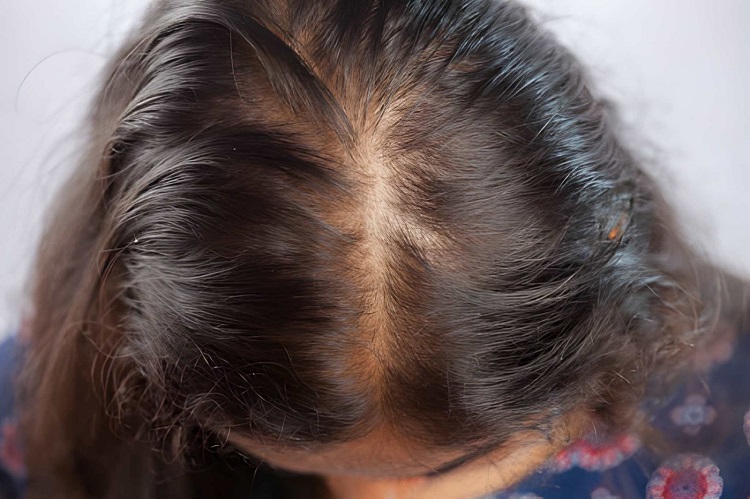
That’s how a reader described her hair thinning in front, back in March. Not shedding, not clumps in the drain, nothing dramatic. Just… less, in one specific spot at the front of her scalp, where she used to clip her bangs back.
She’d done the responsible thing first. Mentioned it to her doctor at a routine visit. Got a shrug and “probably just aging, keep an eye on it.”
Which isn’t wrong. It’s also not useful.
She wanted to know what was actually happening under her scalp before deciding whether to wait, treat, or push for a referral. I get some version of that message often enough now that I started keeping a loose file on it.
Gradual thinning at the front, noticed first by the woman herself rather than anyone around her. That part isn’t rare. What surprised me was how differently two women could describe an almost identical pattern and mean two completely different things medically.
1 Why This Isn’t Another FPHL Explainer
You’ve probably already read the female pattern hair loss article. Skimmed a few Reddit threads. Maybe bookmarked one that said “just try minoxidil for six months and see.”
None of that is wrong, exactly. It’s just incomplete.
Here’s what those pieces tend to skip: hair thinning in front isn’t always the same condition wearing the same face. At least three different mechanisms can produce that identical visual pattern, and treating the wrong one wastes months you don’t need to lose.
So this isn’t a rehash. It’s the differential nobody walked you through — which one you’re actually dealing with, and how to tell.
2 Hair Thinning in Front: The Three Things It Actually Is
Three different processes can thin the same patch of scalp. That’s the part most articles skip past on their way to a product list.
Skin doesn’t have that many ways to lose visible density. Shrink the hair shaft, destroy the follicle opening, or damage the follicle mechanically through repeated tension. All three land in the same spot for a lot of women — right at the hairline, right where parts widen first — because that’s simply where the anatomy is most vulnerable. Different causes, same battlefield.
Androgenetic Thinning
This is the one everyone’s already read about, and for good reason: it’s the most common. Hormonally sensitive follicles gradually produce thinner, shorter hair strands over years, not weeks. The skin underneath stays completely normal. No scarring, no texture change, no redness.
What’s easy to miss is that this process is gradual almost by definition. If a reader tells me thinning in front happened over a single dramatic month, androgenetic loss usually isn’t the first suspect. A dermatologist can confirm the diagnosis through dermoscopy, sometimes paired with bloodwork to rule out other contributors.
Frontal Fibrosing Alopecia
Less commonly diagnosed, though awareness of it has grown quickly over the past decade. This one doesn’t shrink the hair shaft. It scars the follicle opening itself, and that distinction matters enormously, because scarring is permanent in a way shrinkage isn’t.
A few things tend to show up alongside it. A smooth, shiny quality to the skin at the hairline. Sometimes visible loss of the tiny follicle openings you’d normally see under close inspection. Eyebrow thinning often comes with it too — worth mentioning to a doctor even if it seems unrelated. It’s more frequently diagnosed after menopause, though not exclusively.
Nobody should self-diagnose this one. Mayo Clinic notes that a scalp biopsy is often the only way to confirm it definitively, and catching it earlier genuinely changes the range of treatment options available.
Traction-Related Thinning
The most mechanical of the three, and often the easiest to reason about once you know what to look for. Years of tight ponytails, buns, or repeated heat styling at the hairline put sustained tension on those follicles. Early on, this can look like mild redness or small bumps before any visible thinning shows up at all.
Here’s the useful part: caught early, this kind is often reversible simply by reducing the tension. Left unaddressed for years, it can progress toward permanent follicle damage — the same territory covered in what actually regrows a receding edge, which starts to resemble the fibrosing pattern above even though the underlying cause is completely different.
None of these three are interchangeable, and none of them are something a mirror alone can sort out reliably. What a reader can do is pay attention to the details that separate them: how fast it happened, whether the skin itself changed, whether eyebrows or styling habits are part of the picture. That’s the information worth bringing to a dermatologist, because it’s usually the difference between a five-minute appointment and one that actually gets somewhere.
3 Quick Comparison
If you’ve read this far, you already know the details matter more than the label. Here’s the same distinction laid out side by side, the version worth screenshotting before your next appointment.
| Feature | Androgenetic | Frontal Fibrosing Alopecia | Traction |
|---|---|---|---|
| Onset | Gradual, years | Gradual, often postmenopausal | Tied to styling history |
| Skin at hairline | Unchanged | Smooth, scarred, shiny | Can show redness/bumps early |
| Eyebrow/body hair | Usually unaffected | Often also thins | Unaffected |
| Reversibility | Partial with treatment | Not reversible once scarred | Reversible if caught early |
| First step | Dermatologist + possible minoxidil | Dermatologist, biopsy often needed | Reduce tension, dermatologist if not improving |
None of these categories are self-diagnosable with certainty. What this table is good for is knowing which questions to ask, not answering them yourself.
4 What the Reader Case Revealed
She turned out to be androgenetic. Confirmed by a dermatologist she found through her own research, not mine — I made sure she understood that was the right next step, not a guess I could make for her over email.
But here’s the part that actually stuck with me. By the time she got that confirmation, she’d already spent close to eight months on a rosemary-oil routine and a thickening shampoo, both aimed at a mechanism that wasn’t hers. Not because either was a bad idea in general. Just because neither one does much for gradual hormonal miniaturization, which is a different problem than a dry scalp or reduced circulation.
That’s the piece worth sitting with. She didn’t waste time because she wasn’t trying. She wasted time because she started with a product before she had a mechanism.
I think that’s true more often than any of us want to admit. It’s a lot more satisfying to buy something and start using it than to sit with “I don’t actually know which of three things this is yet.” The second option feels slower. It usually isn’t, though, once you count the months spent on the wrong approach.
Once she knew what she was actually treating, the rest of her decisions got a lot easier to make. Not because the answer was complicated. Because she stopped guessing at it.
5 Vitamin and Nutrient Deficiencies: What’s Actually Evidence-Backed
Every hair loss thread eventually turns into a supplement thread. Worth sorting out which nutrients actually have research behind them, and which just have marketing behind them.
Iron and Ferritin
This is the one with the strongest evidence, and also the one most often skipped in a standard bloodwork panel unless you specifically ask for ferritin rather than just hemoglobin. A meta-analysis of over 10,000 women found a genuinely established link between low iron stores and hair shedding, particularly in women with heavy menstrual cycles or a history of anemia. If a dermatologist hasn’t checked ferritin specifically, it’s worth asking for it by name.
Vitamin D
Reasonably well-supported, though the relationship is more correlational than fully mapped out mechanistically. Low vitamin D levels show up disproportionately often in women reporting hair thinning, and research on the vitamin D receptor confirms it plays a real role in the follicle’s growth cycle. That’s not the same as saying supplementation reverses thinning on its own. It’s one piece worth checking, not a guaranteed fix.
Biotin
Here’s where I’ll say something a little more pointed than usual: true biotin deficiency is rare in people eating a normal varied diet. Most of the biotin-for-hair-growth marketing you’ve seen online is built on studies of people who had a diagnosed deficiency to begin with, which is a very different population than someone with otherwise normal labs wondering why their hairline looks thinner.
That distinction gets lost constantly, and I think it’s lost on purpose more often than not. A supplement is easier to sell than “check your ferritin,” even though the second one is the more useful advice for most women asking this question.
If you’re going to spend money and attention on one thing from this section, spend it on getting ferritin and vitamin D checked before reaching for a supplement the evidence doesn’t fully support yet. Skip the biotin gummies until you actually know you need them.
6 Why Female Pattern Loss Often Starts at the Front Specifically
Most articles just tell you frontal thinning happens. They skip the more interesting question. Why there, and not somewhere else?
Men with androgenetic loss typically thin at the crown and temples first. Women get hair thinning in front instead, most often, with the part line widening before the crown does. The frontal hairline itself often stays intact even as everything behind it thins.
That’s not a minor cosmetic detail. It suggests the underlying biology isn’t identical between the two patterns, even though both get filed under the same umbrella term.
The working explanation comes down to receptor density. Androgen receptor sensitivity and follicle miniaturization aren’t uniform across the scalp. They vary by region, and that regional variation itself seems to differ between men and women.
Follicles in the frontal-parietal zone appear more responsive to hormonal signals in women specifically. Why that zone, and not another, isn’t fully mapped out at a mechanistic level yet.
I’ll be honest about where the science stops. The pattern itself is fairly well established. The exact reason women’s follicle sensitivity distributes differently across the scalp than men’s does isn’t. Worth knowing that gap exists, so a well-documented pattern doesn’t get mistaken for a fully solved one.
7 When to See a Dermatologist: Clear Escalation Signals
Skip the vague version of this advice. “See a doctor if you’re concerned” isn’t useful when you’re already concerned and don’t know if it’s warranted.
Here’s what actually justifies moving faster rather than waiting it out.
Skin texture change at the hairline itself. Smooth, shiny, or scarred-looking skin where hair used to be is not something androgenetic thinning causes. That’s worth a dermatology visit specifically, not a general checkup.
Eyebrow thinning alongside scalp thinning. On its own, easy to dismiss. Paired with frontal hair loss, it’s a combination worth mentioning by name to whoever you see.
Speed matters too. Changes over a few weeks point somewhere different than changes tracked over a year or more. Faster onset deserves faster attention.
And if fatigue, irregular cycles, or unexplained weight changes are showing up around the same time, mention that too. Thyroid involvement is common enough with hair changes that it’s worth ruling out directly rather than treating as a separate issue.
None of these signals guarantee a specific diagnosis. They do mean the conversation with a dermatologist should happen sooner rather than later.
Checklist: Before Your Appointment
A dermatologist can do more with specifics than with “it’s just been thinning.” A few minutes of prep beforehand tends to make the appointment actually productive.
None of these take long to gather. They just rarely get asked for upfront, so most people show up without them.
8 Concealment and Interim Approaches
Worth saying plainly: none of what follows treats anything. It just makes the wait more livable while you’re figuring out the actual mechanism, or while a treatment plan has time to work.
Hairstyles for thinning hair in front tend to work best when they redistribute volume rather than try to hide the spot entirely. A slightly deeper side part often does more than a middle part, since it shifts weight away from the thinnest section instead of framing it directly.
Root-lifting products can help, though the effect is purely visual — the same distinction that matters when tackling density elsewhere on the scalp. They lift the existing hair at the base, which reads as more density from a distance without changing anything at the follicle level.
Worth mentioning here too: if traction is even a partial contributor, tight ponytails, slicked-back styles, and repeated heat styling right at the hairline work against you during this period. Loosening that up costs nothing and can’t hurt, regardless of which of the three mechanisms turns out to be the actual cause.
None of this is a substitute for figuring out what’s actually happening. Think of it as buying yourself some comfort while the real answer takes shape, not as the answer itself.
9 Key Takeaways
I still think about that first email sometimes. Not because there was some dramatic ending to it. There wasn’t. She didn’t cure anything, and I didn’t treat her. She just got a specific answer after months of guessing, and stopped spending money on the wrong mechanism.
That’s really the whole argument of this article, if it has one. The label doesn’t matter nearly as much as the mechanism underneath it. Get that part right first, and the rest of the decisions get a lot easier to make on your own.