
Table of Contents
I spent a stretch of weeks tracking hormone-related posts across r/PCOS, r/Menopause, and r/FemaleHairLoss for a different project entirely. I wasn’t looking for this pattern. It found me.
The same women, sometimes the same week, were posting in two different subreddits with what looked like opposite complaints. In one thread: hair thinning at the crown, panic about a widening part line. In another, sometimes written by the same person under a slightly different username or just a phrasing tic I’d started recognizing: new coarse hair on the chin, distress about “hormones going haywire.”
Two complaints. One underlying hormonal event. Nobody in either thread seemed to be connecting them.
That bothered me more than it probably should have. If a hormonal shift is loud enough to change hair on the scalp, why would it produce the opposite effect somewhere else on the same body? Popular advice treats hair loss and unwanted hair growth as two unrelated conditions, each with its own subreddit, its own product aisle, its own referral. Biology doesn’t organize itself by internet community.
So I went looking at the actual receptor mechanics. Scalp follicles and chin follicles don’t read androgens the same way. Scalp follicles, especially at the crown and temples, carry a genetic sensitivity to DHT that drives progressive follicular miniaturization. Jaw and chin follicles, by contrast, often get stimulated by that exact same androgen exposure.
Same hormone. Same bloodstream. Two completely different instructions, depending entirely on which follicle is reading the signal.
That’s the thread running through everything below. Instead of treating each hormone as a fact to memorize, this piece maps how one hormonal event shows up differently depending on which follicles are listening — and what that means for figuring out your own pattern.
1 How Hormones Affect Hair Growth (The Core Mechanism)
Hormones don’t act on hair uniformly. Whether a given hormone triggers growth or shrinkage depends almost entirely on how many androgen receptors the local follicle carries, not on the hormone level in your bloodstream alone. That’s the real link between hormonal changes and hair growth — it runs through receptor sensitivity, not through hormone levels read in isolation.
This is the piece most articles skip. They’ll tell you testosterone or DHT is “bad for hair,” full stop. But a follicle on your chin and a follicle on your crown can sit in the exact same hormonal environment and respond in opposite directions.
The Hair Follicle Growth Cycle, Briefly
Every hair follicle moves through its own hair growth cycle stages — growth (anagen), transition (catagen), and rest (telogen) — on an internal clock hormones can speed up or slow down, but rarely override. According to a PMC review on hormonal effects on hair follicles, hormones influence hair primarily by shifting how long a follicle stays in each phase, not by acting instantly.
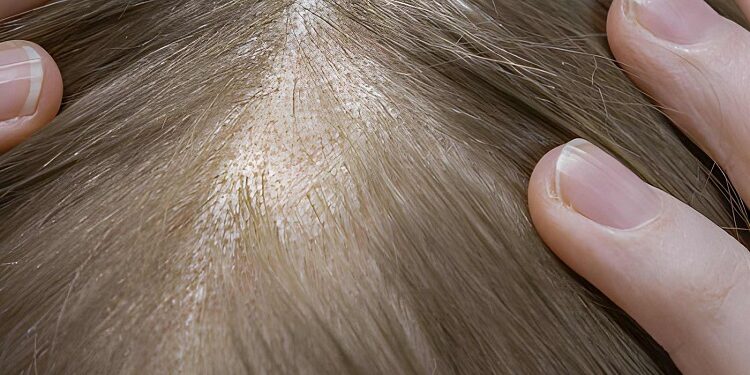
Scalp follicles genetically primed for androgen sensitivity spend progressively less time in anagen with repeated DHT exposure. Over years, that shortening produces visibly finer, shorter hair. That’s the mechanism behind the crown-thinning pattern I kept seeing in one set of Reddit threads.
Why Region Matters More Than the Hormone Itself
A single hormone doesn’t have a single job. Its effect is decided locally, follicle by follicle, based on receptor density that’s largely set by genetics.
That’s why the same androgen shift can shrink hair at the temples while thickening hair along the jaw. It’s not a contradiction. It’s two different instruction sets responding to one signal.
2 Which Hormones Actually Drive Hair Changes
Several hormones influence hair, but they don’t all pull in the same direction, and they don’t all move at the same speed.
DHT (Dihydrotestosterone)
DHT is the androgen most directly tied to follicular miniaturization on androgen-sensitive scalp regions, typically the crown and temples. It’s the same hormone responsible for the chin and jawline hair growth I noticed in the other set of forum posts, because facial follicles there tend to respond to androgen exposure by lengthening their growth phase rather than shortening it.
Estrogen
Estrogen generally extends the anagen phase on the scalp, which is part of why hair often feels fuller during pregnancy, when estrogen is elevated. When estrogen drops, as it does during perimenopause, more follicles shift into the resting phase at once, producing the diffuse shedding pattern common in that life stage.
Progesterone
Progesterone’s role is less direct. Research summarized in the same PMC review notes it can influence follicles indirectly, partly through its interaction with other hormone-signaling pathways, rather than acting on hair receptors as forcefully as estrogen or androgens do.
Cortisol
Chronic elevated cortisol, from prolonged stress, can push a disproportionate number of follicles into the resting phase early. This is the likely mechanism behind stress-triggered shedding that shows up two to four months after a stressful period, a delay that confuses a lot of people because they’ve moved past the stressful event by the time hair starts falling.
Thyroid Hormones
Thyroid hormone deficiency or excess affects the metabolic rate of hair follicle cells directly, which can produce diffuse thinning independent of any androgen or estrogen shift. This is one reason thyroid panels are a standard part of any real hair-loss workup.
Growth Hormone (HGH)
Growth hormone is a different hormone entirely from the androgens and estrogen discussed above, and its direct role in scalp hair is far less established. Some research points to growth hormone supporting follicle metabolism, but the evidence base here is thinner and more mixed than for DHT or estrogen, so I won’t overstate it.
3 Expectation vs. Reality: Hormonal Hair Changes
| Expectation | Reality |
|---|---|
| ✕ Hormonal hair issues mean hair loss, period | ✓ The same hormonal shift can cause thinning in one region and new growth in another |
| ✕ High testosterone always means hair loss | ✓ The effect depends on local receptor sensitivity, not the hormone level alone |
| ✕ Hormonal hair changes happen fast | ✓ Follicle cycle lag means changes often surface 3 to 6+ months after the hormonal event |
| ✕ Fixing the hormone instantly fixes the hair | ✓ Already-miniaturized follicles may not fully reverse even after hormone levels normalize |
4 Why the Timing Is Slower Than You’d Expect
Hormonal hair changes rarely show up right away. That delay is one of the most consistently misunderstood parts of this topic, based on how many forum posts ask why hormone therapy “isn’t working yet” after just a few weeks.
Each follicle has to finish its current growth cycle phase before a hormonal shift can influence what comes next. A follicle that just entered anagen when your hormones changed won’t show that change until it eventually cycles into telogen and regrows, which can take months.
This is exactly why I found reader stories like the one in postpartum hair loss, where shedding starts well after the hormonal event that triggered it, not during it. The same lag logic applies here. If you’re tracking a hormonal cause and expecting an immediate visual result, you’re working against basic follicle biology, not against your treatment.
5 Which Hormonal Pattern Matches Your Symptoms?
Four hormonal patterns tend to show up most often: androgen excess, estrogen decline, thyroid imbalance, and cortisol-driven shedding, each with a distinct symptom cluster. Matching your specific mix starts with looking at what’s changing together, not any single symptom in isolation. Use this as a starting point for pattern recognition, not a diagnosis. Bloodwork and a clinical evaluation are the only way to confirm any of these.
- Crown or part-line thinning, paired with new facial hair and irregular cycles, points toward an androgen excess pattern, often associated with PCOS.
- Diffuse scalp thinning alongside hot flashes and skipped periods points toward an estrogen decline pattern, typically tied to perimenopause.
- Thinning combined with fatigue, dry skin, and brittle hair texture suggests a thyroid-related pattern.
- Sudden, diffuse shedding two to four months after a major physical or emotional stressor suggests a cortisol-driven telogen effluvium pattern.
If you’re seeing a mix of these, especially scalp thinning alongside new hair growth somewhere unexpected, that combination itself is informative. It’s consistent with the androgen-to-estrogen ratio shift described above, not two unrelated conditions.
6 What Actually Helps (And What Doesn’t)
Medical Evaluation Options
A proper hormonal hair evaluation typically starts with bloodwork, not a shampoo aisle. According to the Mayo Clinic’s overview of hirsutism, common diagnostic steps include hormone panels and, when PCOS is suspected, pelvic imaging.
Clinicians evaluating an androgen excess pattern typically consider anti-androgen medications or hormonal birth control, but that decision sits entirely with a prescriber who has your bloodwork, not with anything I can tell you here. I’m not able to recommend a specific treatment, and I wouldn’t want to.
What’s Within Your Control
Nothing you apply topically will override a systemic hormonal driver. That doesn’t mean topical care is pointless. It means it plays a supporting role in scalp environment and follicle health, not a corrective one for the hormonal signal itself.
If you’re dealing with a pattern that looks like early hair thinning in the front, understanding whether it’s androgen-driven versus stress-driven changes what’s actually worth pursuing first.
7 Frequently Asked Questions
Which hormone stimulates hair growth on the body and face?
DHT is the primary hormone behind increased facial and body hair growth in androgen-sensitive individuals, because facial follicles typically respond to androgen exposure by extending their growth phase rather than shrinking, the opposite of what happens on androgen-sensitive scalp regions.
What hormone are you lacking if your hair is falling out?
There’s rarely a single hormone “missing.” Falling estrogen during perimenopause, elevated cortisol from chronic stress, and thyroid hormone imbalances can each independently trigger shedding, which is why a hormone panel rather than a single-hormone guess is the accurate diagnostic step.
How do hormones and genetics influence hair growth together?
Genetics largely determine how many androgen receptors your individual follicles carry, which is why two people with identical hormone levels can show completely different hair responses. The hormone provides the signal; genetics determine which follicles are built to respond to it and how strongly.
Can regulating hormones reverse hair that’s already grown or already thinned?
Normalizing hormone levels can stop further miniaturization or unwanted growth going forward, but it doesn’t automatically reverse hair that’s already changed. Follicles that have been miniaturized for an extended period, or facial hair that’s already grown in coarse, often require separate intervention beyond hormone correction alone.