
Table of Contents
1. What Scalp Exfoliation Actually Is
Scalp exfoliation clears away dead skin cells, excess sebum, sweat residue, and leftover product sitting at the root. Pollution particles get in there too, especially in a city. None of this shows up dramatically day to day. It just accumulates.
Shampoo doesn’t fully handle this. It lifts surface oil and dirt and rinses it away. That’s a cleaning step, not a resurfacing one.
Exfoliation goes deeper. It loosens material that’s stuck to the scalp’s surface, the stuff shampoo tends to slide past.
A lot of readers assume exfoliation works on the hair itself, the way a mask or deep conditioner does. It doesn’t. The strands aren’t the target. The skin underneath is.
This distinction matters. Scalp discomfort often starts at a surface you can’t easily see, not in the hair.
So why bother? A scalp carrying heavy buildup tends to feel off. Itchy. Sometimes greasy again within a day of washing. Occasionally flaky in a way that has nothing to do with dandruff.
Buildup also blocks other products from working. A serum applied over a layer of residue isn’t reaching the scalp the way it’s meant to.
One thing I want to be direct about: exfoliation supports a cleaner scalp environment. It does not make hair grow faster. There’s no mechanism by which clearing dead skin speeds up follicle biology.
What it can do is make existing hair look fuller. Heavy buildup weighs strands down. Clear it, and hair often looks better, not because more of it grew, but because what’s already there isn’t being pressed flat anymore.
2. Who Should—and Shouldn’t—Exfoliate
Not every scalp needs this, and not every scalp should skip it either. It depends on what’s happening at the root.
If you deal with an oily scalp, exfoliation tends to help. So does heavy styling product use, since gels, waxes, and sprays leave residue that shampoo alone doesn’t fully clear. Dry shampoo users are in a similar spot. That powder absorbs oil, but it also sits on the scalp between washes and needs to be lifted off eventually.
Swimmers benefit too, mainly because chlorine and pool chemicals cling to hair and scalp longer than people expect. Anyone spending a lot of time in polluted air is in the same category. So are readers dealing with mild, occasional flakes that come and go with buildup rather than a diagnosed condition.
Then there’s the other side. If you have an open wound on the scalp, an active infection, or a flare-up of psoriasis or eczema, this isn’t the moment to start scrubbing. The skin barrier is already compromised, and exfoliation adds friction it can’t handle right now.
The same caution applies after recent scalp procedures, whether that’s a chemical treatment, a minor surgical procedure, or anything that’s left the area sensitive. And if your scalp is extremely inflamed for any reason, exfoliating first and asking questions later is the wrong order. Talk to a doctor or dermatologist before adding anything abrasive, chemical or physical, into the mix.
Most of this comes down to reading your own scalp honestly. Oily and buildup-prone skin tends to tolerate exfoliation well. Skin that’s already irritated, broken, or inflamed needs to heal first.
3. Physical vs. Chemical Exfoliation
There are two ways to exfoliate a scalp, and they work in completely different ways.
Physical exfoliation relies on friction. Scalp scrubs use small granules to manually lift away dead skin and buildup as you massage them in. Silicone brushes do something similar with soft, flexible bristles instead of grit, which makes them a gentler entry point for people nervous about scrubbing their scalp with anything textured. Massage tools sit somewhere in between, loosening buildup mostly through pressure and movement rather than abrasive particles.
Chemical exfoliation works without any scrubbing at all. Ingredients like salicylic acid dissolve the bonds holding dead skin cells together, which happens to make it especially useful for oily, flake-prone scalps since it’s oil-soluble and can get into clogged follicles. Glycolic acid and lactic acid are both AHAs, and they work on the skin’s surface to encourage cell turnover. Lactic acid tends to be the gentler of the two. Fruit enzymes take the mildest approach of the group, breaking down surface buildup slowly rather than actively dissolving it.
So which one fits your scalp?
Oily scalps generally do well with salicylic acid, since it targets excess oil directly. Dry scalps usually respond better to something gentler, like lactic acid or a mild physical option such as a silicone brush, since anything too aggressive can leave dryness worse than it started. Sensitive scalps should lean toward fruit enzymes or skip actives altogether and stick to a soft brush with minimal pressure.
If you’re just starting out, a silicone brush is probably the easiest place to begin. It’s low-risk, hard to overdo by accident, and gives you a feel for how your scalp responds before introducing anything with active ingredients.
4. Signs You Need to Exfoliate (and Signs You’ve Overdone It)
A scalp carrying buildup usually tells you before you notice it consciously. Roots get greasy again a day or two after washing, sometimes faster. Flakes show up that aren’t the same as dandruff, more like dry residue than an oily, yellowish flake. Itching creeps in without any obvious cause.
Products stop absorbing the way they used to. A serum that once soaked in within minutes just sits there instead. Hair can start feeling heavier too, not because more of it is falling out, but because buildup is literally weighing strands down at the root.
Overdoing it looks different, and it’s worth knowing the difference.
Redness after exfoliating is the first sign something went too far. Burning or stinging during the process, rather than just a slight tingle, is another. If your scalp feels tight in the hours afterward, almost stretched, that’s the skin barrier reacting to too much friction or too strong a chemical exfoliant.
Here’s the part that surprises people: over-exfoliation often makes the scalp oilier, not drier. Strip away too much protective oil, and the scalp tends to overcorrect by producing more of it. So if you’re exfoliating more because your scalp feels greasy, and it keeps feeling greasy no matter how often you do it, the exfoliation itself might be the problem.
Dryness can show up too, particularly with physical scrubs used too aggressively or too often. If your scalp feels tight, flaky, and irritated at the same time, that’s not buildup anymore. That’s a scalp that needs a break, not another round of scrubbing.
5. How Often to Exfoliate by Scalp Type
Frequency depends on scalp type, and getting this wrong is where most irritation starts.
An oily scalp can usually handle exfoliation once or twice a week. Normal scalps do better with less, somewhere around once a week to once every two weeks. Dry scalps need even more space between sessions, closer to every two to four weeks. Sensitive scalps shouldn’t follow a fixed schedule at all. Exfoliate only when there’s a clear reason to, and use the gentlest option available when you do.
It’s tempting to assume more frequent exfoliation means a cleaner, healthier scalp. It doesn’t work that way.
The scalp has a barrier function, a thin layer of oils and skin cells that keeps moisture in and irritants out. Exfoliate too often, and that barrier doesn’t get time to rebuild between sessions. Once it’s compromised, the scalp becomes more reactive to everything, products it used to tolerate fine, weather changes, even water temperature.
There’s also a microbiome living on the scalp, a balance of bacteria and yeast that plays a role in keeping things stable. Frequent exfoliation disrupts that balance too, and an unsettled microbiome is often what shows up later as unexplained itching or sensitivity that wasn’t there before.
I’ve seen this pattern come up again and again in reader questions: someone starts exfoliating more because their scalp feels off, the scalp gets worse instead of better, so they exfoliate even more to compensate. It’s a cycle worth catching early. If your current frequency isn’t working, the answer is rarely to do it more. It’s usually to scale back and let the scalp recover first.
6. The At-Home Routine, Step by Step
Here’s how a typical scalp exfoliation session goes, start to finish.
Step 1: Detangle.
Working an exfoliant through hair that’s still knotted just adds friction you don’t need.
Step 2: Section your hair.
This lets you actually reach the scalp instead of working through a full head of hair at once. Thick or long hair especially benefits here, since it’s easy to miss patches of scalp otherwise.
Step 3: Wet the scalp, if the product calls for it.
Some exfoliants are meant to go on dry hair. Others need dampness to spread evenly. This depends entirely on what you’re using, so check the label before assuming.
Step 4: Apply the exfoliant to the scalp.
Not the length of your hair, just the scalp.
Step 5: Massage gently.
Circular motions, thirty seconds to a minute per section. Longer isn’t better. It just raises the odds of irritation.
Step 6: Leave on if instructed.
If the product says to wait a few minutes, do that. If not, move straight to rinsing.
Step 7: Rinse thoroughly with lukewarm water.
Hot water strips more oil than necessary and can leave the scalp drier afterward, which somewhat defeats the purpose.
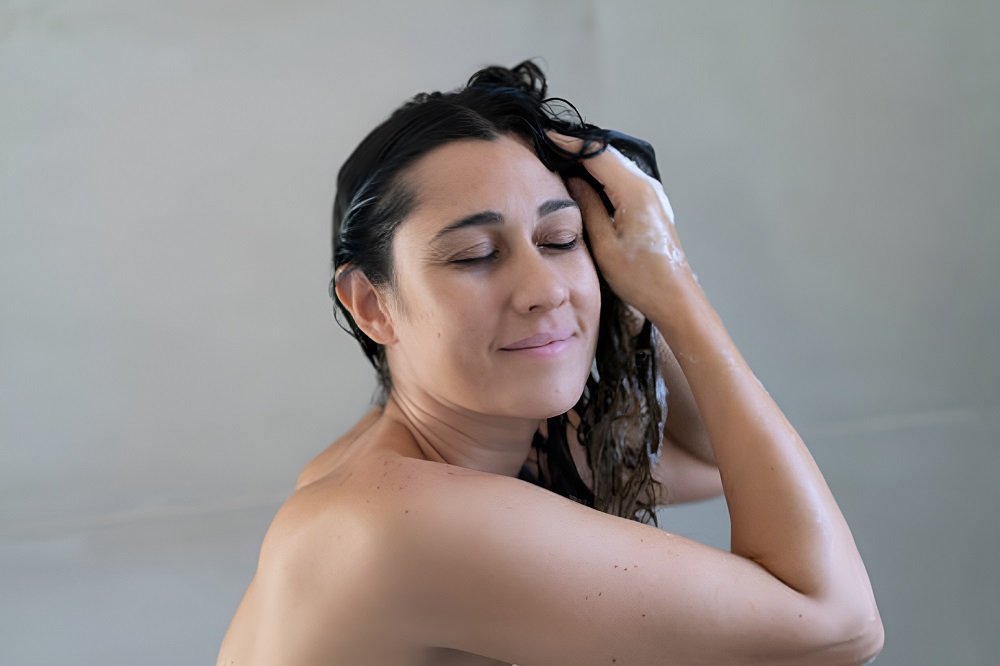
Step 8: Shampoo.
Step 9: Condition your hair lengths.
Avoid the scalp itself if you’re using something heavier.
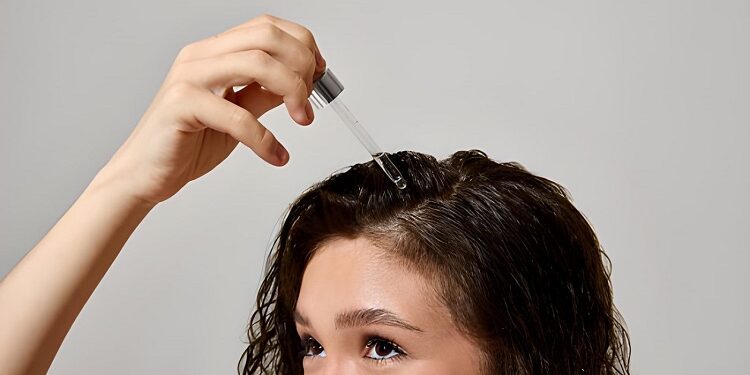
Step 10: Apply a scalp serum, if your routine includes one.
Should exfoliation happen before or after shampoo? It depends on the product. A pre-shampoo scrub is designed to loosen buildup so your shampoo can rinse it away more effectively afterward. A post-shampoo exfoliating treatment works differently. It’s meant for a scalp that’s already clean, without oil or product getting in the way.
Neither approach is universally better. It comes down to what the specific product was formulated for, and that’s exactly why reading the instructions matters more than following a general rule you saw somewhere else.
7. DIY Ingredients: Safe vs. Risky
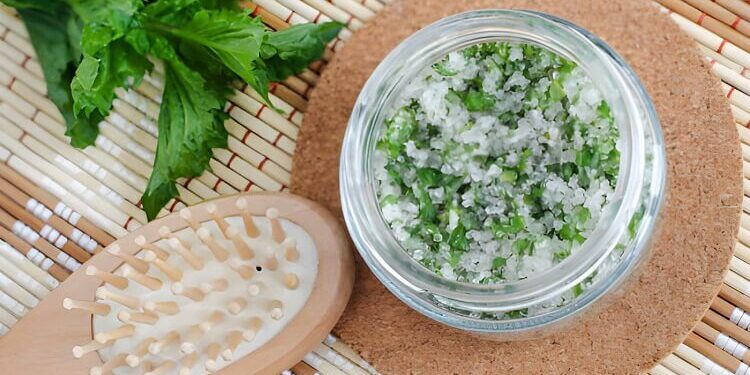
A few kitchen ingredients work reasonably well as gentle scalp exfoliants. Brown sugar is one of the more common choices, since its granules are small enough to loosen buildup without being harsh. Finely ground oatmeal works on a similar principle, and it has the added benefit of being soothing on skin that’s a little sensitive.
Aloe vera gel isn’t exfoliating on its own, but mixed with a gentle abrasive, it helps calm any irritation the process might cause. Honey and jojoba oil serve the same purpose, adding moisture back in so the scalp isn’t left stripped after scrubbing.
Other ingredients show up in home recipes that shouldn’t be anywhere near a scalp.
| Ingredient | Why to avoid it |
|---|---|
| Coarse salt | Granules are too sharp and large, causing micro-tears in the scalp |
| Baking soda | Highly alkaline, disrupts the scalp’s natural pH balance |
| Lemon juice | Acidic enough to irritate, especially on broken or sensitive skin |
| Undiluted essential oils | Concentrated enough to cause burns or allergic reactions |
Baking soda is worth calling out specifically. The scalp sits at a mildly acidic pH, and baking soda is the opposite of that. Use it repeatedly, and the scalp’s natural balance gets thrown off, which can leave it more prone to dryness and irritation over time, not less.
Lemon juice gets recommended online constantly, usually for shine or as a natural clarifier. The acidity that makes it effective at cutting through residue is the same thing that makes it risky on skin that’s already inflamed or compromised.
As for DIY versus commercial products, there’s a real tradeoff either way. DIY recipes are cheap and use ingredients you can see and control, which appeals to a lot of readers who’d rather avoid unfamiliar chemical names. But they’re inconsistent. A homemade scrub doesn’t come with a tested formulation, so the ratio of abrasive to soothing ingredient is really just a guess. Commercial products go through more testing and tend to be more consistent from use to use, though they cost more and require reading labels carefully rather than trusting familiar pantry items. Neither is automatically the safer option. It depends on the ingredients and how they’re used.
8. Technique Matters More Than Product
You can buy the gentlest exfoliant available and still irritate your scalp if the technique is wrong.
Gentle circular motions are the standard for a reason. They loosen buildup through steady, even pressure rather than force. If you’re using a brush, the same rule applies: light pressure, consistent movement, no pressing down hard in an attempt to clean deeper. A brush isn’t meant to scour anything. It’s meant to lift.
Fingernails should never touch the scalp during this process. It’s a common habit, especially when dealing with an itchy scalp, but nails create small scratches that aren’t always visible right away. Those scratches can turn into irritation, or worse, an entry point for infection if bacteria get in.
Before using any new exfoliating product, patch-test it. Apply a small amount to one area of the scalp and wait 24 to 48 hours to check for redness, burning, or itching before using it more broadly. This matters more with chemical exfoliants than physical ones, since reactions to actives like salicylic or glycolic acid aren’t always immediate.
It also helps to introduce one new treatment at a time. Adding a new scrub, a new serum, and a new shampoo all in the same week makes it nearly impossible to figure out what caused an issue if one shows up. Give each product a couple of weeks on its own before adding the next.
None of this is complicated, but it’s the part people skip. The product matters less than most readers assume. How it’s used matters more.
9. Exfoliation ≠ Dandruff Treatment
Flakes on the scalp aren’t all the same thing, and this is where a lot of confusion starts.
Cosmetic flakes come from dead skin cells and buildup sitting on the scalp surface. They’re usually dry, small, and come off easily. This type responds well to exfoliation, since the whole problem is a physical layer that needs to be lifted away.
True dandruff is different. It’s driven by an overgrowth of a yeast called Malassezia, which lives on everyone’s scalp in small amounts but can multiply and trigger flaking, oiliness, and itching when it gets out of balance. This isn’t a surface residue issue. It’s a microbial one.
| Cosmetic flakes | True dandruff | |
|---|---|---|
| Cause | Dead skin, buildup | Yeast overgrowth (Malassezia) |
| Texture | Dry, small, loose | Often oily, larger clumps |
| Responds to exfoliation? | Yes | Only partially |
| Needs | Regular exfoliation | Medicated shampoo (zinc pyrithione, ketoconazole, selenium sulfide) |
Exfoliation can help with dandruff-related flakes to some degree, since it removes the visible buildup those flakes leave behind. But it doesn’t touch the underlying cause. If the yeast overgrowth driving it isn’t addressed, the flaking comes back regardless of how often the scalp gets scrubbed.
This is the part I see readers get wrong most often. They assume persistent flaking means they’re not exfoliating enough, when the real issue needs a medicated shampoo, not a stronger scrub. If flaking doesn’t improve after a few weeks of consistent, gentle exfoliation, that’s usually a sign it’s dandruff rather than buildup, and worth addressing with an antifungal ingredient instead.
10. Fitting Exfoliation Into a Full Scalp Care Routine
Exfoliation isn’t a routine on its own. It’s one piece of a larger one, and it works best when the steps around it are accounted for too.
Moisturizing afterward matters more than people expect. Exfoliation removes buildup, but it can also strip some of the scalp’s natural oil in the process. A lightweight scalp serum or oil afterward helps replace what was lost, especially for dry or sensitive scalps that don’t have much oil reserve to begin with.
If your scalp is exposed to sun right after exfoliating, a hat or some sun protection is worth considering. Fresh, exfoliated skin is slightly more vulnerable than skin with a full layer of buildup sitting on top of it, so a bit of caution here goes a long way.
Seasons change how often this should happen too. Winter air tends to dry out the scalp already, so exfoliating less during colder months gives it room to hold onto moisture. Humid summers, on the other hand, often mean more oil and sweat, which can call for slightly more frequent sessions if your scalp runs oily.
Workouts factor in the same way. Sweat mixes with oil and product residue, and if you’re working out often, buildup accumulates faster than it would otherwise. Hard water adds another layer to this. Mineral deposits from hard water settle on the scalp over time, and exfoliation helps clear that out along with everything else.
This is also where clarifying shampoo enters the picture, and it’s worth knowing the difference. A clarifying shampoo is a deep-cleaning wash, meant to strip heavy buildup all at once. A scalp scrub works more specifically on dead skin and surface debris through physical or chemical action. They’re not interchangeable. Someone with heavy product buildup from styling might use a clarifying shampoo occasionally, then follow up with regular exfoliation to maintain the scalp between those deeper cleans. Using both isn’t overkill as long as they’re spaced out and not stacked into the same wash day.
11. Special Considerations by Hair Type
Hair type changes how exfoliation should actually be done, even though the goal stays the same across the board.
Curly and coily hair tends to be drier overall, so exfoliation needs to be gentler and less frequent than what would work on straighter hair. The curl pattern also makes it harder to reach the scalp directly, which is where sectioning becomes less of a suggestion and more of a requirement. Straight hair usually gives easier access to the scalp, so there’s less friction involved just getting the product where it needs to go. Fine hair sits somewhere in between, and the main risk here is over-exfoliating, since fine strands show buildup and product residue more visibly than thicker hair does.
Thick hair, curly or straight, needs proper sectioning to exfoliate effectively. Working through a full head at once means missing patches of scalp without realizing it. Splitting hair into four to six sections, front to back, ensures the exfoliant actually reaches skin rather than just coating the outer layer of hair.
Protective styles complicate the timing. Braids, twists, and similar styles limit scalp access for days or weeks at a time, so exfoliation typically needs to happen before installing the style and again once it’s taken down, rather than during. Wash day for textured hair often already includes a pre-poo or scalp treatment step, and that’s usually the most practical point to work exfoliation in, since the scalp is already being prepped for a deeper clean anyway.
Extensions and wigs raise a similar issue. The natural scalp underneath still needs care even when it’s covered most of the time. This usually means exfoliating during scheduled removal or maintenance appointments, since trying to work a scrub or brush around fixed extensions isn’t practical and can put unnecessary strain on the hair they’re attached to.
12. Is It Working? What Progress Looks Like
Progress with scalp exfoliation is gradual, and it helps to know what a realistic timeline actually looks like before expecting results.
Most readers notice a difference within two to four weeks of consistent, appropriately-frequent exfoliation. That’s not immediate, and it shouldn’t be. The scalp needs time to respond to a changed routine, and jumping to a different product or frequency before four weeks have passed usually just resets the clock.
Signs that it’s working tend to show up gradually rather than all at once. The scalp feels cleaner for longer between washes. Itching that used to show up a day or two after washing starts fading. Buildup that used to reappear quickly takes longer to come back. Products absorb the way they’re supposed to instead of sitting on the surface. And overall, the scalp just feels lighter, less weighed down, less irritated.
Here’s a sample weekly routine for a normal-to-oily scalp using a moderate exfoliation frequency:
| Day | Focus |
|---|---|
| Monday | Regular wash, no exfoliation |
| Wednesday | Scalp exfoliation (scrub or chemical exfoliant), followed by shampoo and conditioner |
| Friday | Regular wash, scalp serum if needed |
| Weekend | Rest day, light moisturizing if scalp feels dry |
This isn’t a fixed schedule everyone should copy. It’s a starting point to adjust based on how your own scalp responds, since a dry or sensitive scalp would stretch this out further, and an oily scalp might shift exfoliation to twice a week instead of once.
The clearest sign the routine is actually working isn’t a dramatic before-and-after. It’s a scalp that stops needing your attention as often.
13. Common Mistakes and Myths
A few habits show up again and again in reader questions, and most of them come from good intentions applied a little too aggressively.
Over-scrubbing is probably the most common one. People assume more pressure means a cleaner scalp, so they push harder with a brush or scrub than they need to. It doesn’t clean better. It just increases the odds of micro-tears and irritation. Over-frequency follows a similar logic, exfoliating multiple times a week when the scalp type calls for once or twice a month.
Mixing acids is a mistake that’s easy to make without realizing it. Using a salicylic acid treatment and a glycolic acid scrub in the same week, for example, stacks two actives that are each doing their own version of exfoliation. The scalp ends up over-exfoliated without anyone intending that outcome. Skipping shampoo after a treatment that calls for it is another one. Some exfoliants are meant to be rinsed and followed by a proper wash, and leaving residue behind defeats a chunk of the purpose. And then there’s ignoring irritation. Redness or burning that shows up during or after exfoliating is a signal to stop, not a sign to push through and hope it settles on its own.
The myths tend to be just as persistent.
Daily exfoliation isn’t better. It’s actually one of the fastest ways to damage the scalp barrier. Scrubbing harder doesn’t clean deeper either, since buildup lifts through consistent gentle friction, not force. DIY being automatically safer than commercial products isn’t true, since homemade recipes lack any tested ratio and can be just as irritating, sometimes more so, as a properly formulated product.
Exfoliation curing dandruff is a myth I see often enough to call out specifically. It can help with the surface flaking dandruff leaves behind, but the yeast overgrowth driving true dandruff needs a medicated approach, not a stronger scrub. And exfoliation speeding up hair growth just isn’t how any of this works. It clears the environment hair grows in. It doesn’t touch the biology of the follicle underneath.