

Table of Contents
You’ve probably dropped a small fortune on shampoos that promised to “transform your hair” only to end up with the same greasy roots by noon. Or maybe you’re dealing with flakes that won’t quit no matter how much you scrub. I see it every single week in my practice here in Astoria—and nine times out of ten, the issue isn’t the products. It’s that nobody ever told you about your scalp type.
Here’s what nobody tells you: you’re buying products for your hair type when you should be shopping for your scalp type.
Yeah, I know. Game changer, right?
After 10 years of working with hundreds of clients—from the marketing exec who can’t figure out why her hair looks oily by 2 PM to the guy who thought his dry scalp was just “winter weather”—I’ve realized most people are solving the wrong problem. They’re treating symptoms (frizzy ends, limp roots) instead of addressing the source: their scalp.
In the next 5 minutes, you’re going to learn exactly how to determine your scalp type using the same method dermatologists use, except you won’t need a $200 office visit or any fancy equipment. Just you, some blotting paper, and a mirror.
Let’s get to the root of the problem.
01
of 10Why Knowing Your Scalp Type Matters (Before You Test)
Look, I get it. You’re thinking, “Zahid, I just want my hair to look decent for work. Do I really need to add another thing to my routine?”
Short answer? Yes. But hear me out.
The Difference Between Hair Type and Scalp Type
Most of the marketing you see—the Instagram ads, the influencer posts, the fancy salon recommendations—focuses on hair type. Curly, straight, wavy, coily. Type 2B, 3A, 4C. All of that matters, sure.
But here’s the thing: your hair type tells you about the strands growing out of your head. Your scalp type tells you about the environment those strands are growing from.
Think of it like this. Your scalp is the soil. Your hair is the plant. You can dump expensive fertilizer (products) on unhealthy soil all day long, but if that foundation is off, nothing’s going to thrive.
I learned this the hard way back when I first started noticing my own thinning. Spent probably $300 on products designed for “fine, thinning hair” before I realized my scalp was producing way too much oil, which was literally suffocating my follicles. Once I fixed the soil? The plant started growing again.
How Your Scalp Type Affects Hair Health
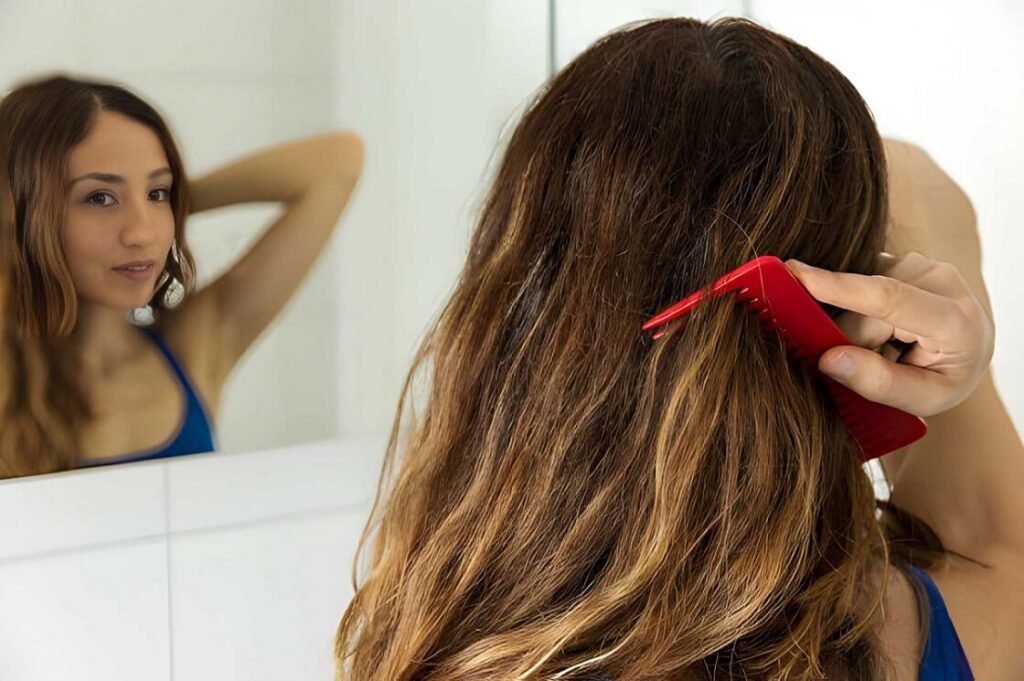
Your scalp produces sebum—that’s the natural oil your body makes to protect and moisturize. Some people’s scalps are oil factories. Others barely produce enough. Most of us? We’re somewhere in the middle or dealing with combination zones.
When your scalp is out of balance:
- Too much oil clogs follicles, makes hair look dirty fast, and can actually slow down hair growth
- Too little oil leads to irritation, flaking, breakage at the root, and that tight, uncomfortable feeling
- Uneven oil production means you’re constantly chasing problems in different areas
Here’s what I’ve seen over and over in my practice: a client comes in complaining about “damaged hair” or “hair that won’t grow.” We do a simple scalp check. Turns out their scalp is either drowning in oil or dry as the Sahara. We adjust their routine to match their actual scalp type—not their hair type—and within six weeks, they’re texting me photos of baby hairs sprouting along their hairline.
It’s not magic. It’s just finally using the right products for the right problem.
Signs You’re Using the Wrong Products for Your Scalp
You might be nodding along thinking, “Okay, but how do I know if I’m doing it wrong?”
Here’s your checklist. If you’re dealing with any of these, there’s a good chance you’re treating the wrong scalp type:
The “My Hair Looks Dirty by Lunchtime” Club
- Greasy, flat roots within hours of washing
- You’re washing daily (or more) and it’s not helping
- Dry shampoo is basically a food group at this point
The “Why Is My Head So Itchy?” Situation
- Constant urge to scratch
- Flaking that shows up on your shoulders
- Scalp feels tight, especially after washing
The Buildup Brigade
- Hair feels coated or heavy even right after washing
- Products don’t seem to absorb anymore
- You can actually feel residue when you run your fingers along your scalp
The “Nothing Works for Me” Crew
- You’ve tried every shampoo at Target and Sephora
- Products that work for your friend with similar hair do nothing for you
- Your scalp feels different in different areas (oily crown, dry sides)
If you’re checking multiple boxes here, don’t worry. You’re not broken. You just haven’t identified your scalp type yet. We’re about to fix that.
02
of 10The 4 Main Scalp Types (Know Before You Test)
Before we run the actual test, let me break down what we’re looking for. There are four main scalp types, and understanding them now will make your test results crystal clear.
1. Oily Scalp
The Reality: Your scalp is an oil production machine. Roots look greasy within 12-24 hours of washing. Hair goes flat and limp. You might even see a shine on your scalp if you part your hair.
What’s Happening: Your sebaceous glands are working overtime. Could be genetics (thanks, Mom and Dad), hormones, or even stress. I’ve got clients in their thirties who never had oily scalps until they started working 60-hour weeks in Manhattan.
The Dead Giveaway: If you’re washing your hair every single day—or even twice a day—and you still feel greasy, you’ve probably got an oily scalp. The irony? Overwashing makes it worse because you’re stripping the oils, which tells your scalp to produce even more. It’s a vicious cycle.
2. Dry Scalp
The Reality: Your scalp feels tight, rough, maybe even a little itchy. You’ve got small white flakes (not the big yellowish chunks—that’s dandruff, different issue). Your hair might look dull or brittle near the roots.
What’s Happening: Your scalp isn’t producing enough sebum to keep things moisturized. Could be the weather (hello, New York winters), over-washing with harsh shampoos, or just how your body works.
The Dead Giveaway: That tight, almost uncomfortable feeling after you wash your hair. Or when you scratch your scalp lightly and see tiny white flakes under your nails. If you’re constantly reaching for leave-in treatments and your hair still feels dry at the roots, dry scalp is your likely culprit.
I see this a lot with clients who live in those older Queens apartments with the radiator heat blasting all winter. The air is dry, the heat is intense, and their scalps are screaming for moisture.
3. Combination Scalp
The Reality: This is the “why can’t my scalp just pick a lane?” type. Oily in some zones (usually the T-zone—front of your head, crown), dry or normal in others (around the ears, back of the neck).
What’s Happening: Your sebaceous glands aren’t distributed evenly, or they’re reacting differently to hormones, products, or environmental factors in different areas.
The Dead Giveaway: Your roots look greasy up front, but the hair around your ears or nape feels dry. Or you’re using a mattifying shampoo that fixes your oily crown but makes the sides of your head flaky. You feel like you need two different routines for one head.
This is actually more common than people think. I’d say about 40% of my clients have combination scalps and didn’t realize it until we mapped it out.
4. Sensitive or Balanced Scalp
Sensitive Scalp Reality: Your scalp reacts to everything. New shampoo? Redness. Fragrance? Itching. Even water temperature seems to set it off. You might see pink or red patches, feel burning or stinging, or notice your scalp gets irritated easily.
What’s Happening: Your scalp’s protective barrier is compromised, or you’re naturally more reactive to ingredients, fragrances, or even mechanical irritation (like rough towel-drying).
Balanced Scalp Reality: This is the unicorn. No excess oil, no dryness, no irritation. Your scalp just… exists. Comfortably. You can go 2-3 days between washes without greasiness or discomfort.
The Dead Giveaway (Sensitive): If you’ve ever had to return a product within a week because your scalp started burning or itching, you’re likely sensitive. If you find yourself gravitating toward “gentle,” “fragrance-free,” or “hypoallergenic” everything, your scalp is telling you something.
The Dead Giveaway (Balanced): Honestly? You’re probably not reading this article if you have a balanced scalp. But if you are, you’re here for maintenance or because something recently changed (stress, new medication, pregnancy, menopause).
03
of 10The 5-Minute Dermatologist-Approved Scalp Type Test
Alright, here’s the actual test. I’ve used this method on hundreds of clients, and it’s the same principle dermatologists use when they’re trying to figure out your scalp situation. No appointments needed. No co-pays. Just you and 5 minutes.
What You’ll Need for the Test
Don’t overthink this. You probably have everything already:
The Essentials:
- Blotting paper (the kind you use for your face) OR a plain tissue/paper towel
- Clean hair that’s been washed 24-48 hours ago (this is key—don’t test right after washing)
- Good lighting (bathroom mirror + overhead light, or natural window light)
- A mirror (or your phone camera works great)
- 5 uninterrupted minutes (seriously, lock the bathroom door if you have to)
That’s it. I’ve had clients text me photos of their test results using nothing but a Starbucks napkin and their iPhone flashlight. It works.
Step 1: The Blotting Paper Test (2 minutes)
This is the gold standard. It’s what I do first with every single client who walks into my practice.
Here’s exactly what to do:
- Wait 24-48 hours after your last wash. If you washed your hair this morning, this test won’t work. Your scalp needs time to do its thing. I usually tell clients to test on Day 2 after washing—that’s the sweet spot.
- Grab your blotting paper. If you don’t have the cosmetic kind, a plain white tissue works. Avoid paper towels with patterns or lotions.
- Section your hair. You’re going to test different areas:
- Front hairline (where you’d part your bangs)
- Crown (top of your head)
- Sides (above your ears)
- Nape (back of your neck)
- Press the blotting paper firmly against your scalp. Not your hair—your actual scalp. Hold it there for 10 seconds. Yeah, it feels weird. Do it anyway.
- Examine the paper.
How to Read Your Results:
- Heavy oil absorption (paper is translucent, greasy to the touch): Oily scalp in that zone
- Light oil absorption (small spots or slight translucence): Normal/balanced in that zone
- No oil or barely anything (paper looks the same as when you started): Dry scalp in that zone
- Different results in different areas: Combination scalp
I keep a reference photo on my phone to show clients what “heavy” vs. “light” absorption looks like, because the first time you do this, it can be hard to tell. But trust me—if your scalp is oily, that paper will practically look like you dipped it in cooking oil.
Pro Tip from 10 Years of Testing: Don’t just test one spot and call it a day. Your forehead/crown area tends to be oilier than the back of your head. Test at least 3-4 different zones. I’ve seen so many clients misdiagnose themselves because they only tested their crown (which was oily) and missed their dry sides.
Step 2: The Visual Scalp Check (2 minutes)
Now we’re going to confirm what the blotting paper told us by actually looking at your scalp. This is where people usually go, “Wait, I’ve never actually looked at my scalp before.” You’re not alone.
Here’s the drill:
- Part your hair in 3-4 different sections. Use a comb or just your fingers. Front, crown, sides, back.
- Get good lighting. Seriously, this matters. Stand under your bathroom light or by a window. Use your phone flashlight if you need to.
- Look closely. If you can’t see well, use your phone camera and zoom in. (I know it sounds ridiculous, but I literally do this with clients all the time. Sometimes you need that magnification.)
What You’re Looking For:
Oily Scalp Indicators:
- Visible shine on the scalp (especially crown and front)
- Scalp looks wet or slick even though it’s dry
- Hair roots look clumped or separated (oil weighing them down)
- Pores might look larger or more visible
Dry Scalp Indicators:
- Small white flakes (NOT big yellow chunks—that’s dandruff)
- Scalp looks dull, maybe slightly ashy
- Texture looks rough or uneven
- You might see fine, powdery residue when you scratch lightly
Sensitive Scalp Indicators:
- Redness or pink patches
- Visible irritation (bumps, raised areas)
- Scalp looks inflamed in spots
Balanced Scalp Indicators:
- Even skin tone (no redness, no excessive shine)
- Smooth texture
- No flakes, no grease
- Hair sits naturally at the root without clumping or standing up
Here’s something I learned the hard way: take photos. I’m serious. Your brain will play tricks on you (“Is that shiny or just the light?”). Photos don’t lie. Plus, you can compare them in a month when you retest to see if your routine is actually working.
Step 3: The Touch and Feel Assessment (1 minute)
This is the final piece. Sometimes what you feel tells you more than what you see.
What to Do:
- Run your fingers gently along your scalp. Don’t scratch—just glide your fingertips across different sections.
- Pay attention to the sensations.
Oily Scalp Feels:
- Slippery or slick
- Greasy residue on your fingertips after touching
- Hair feels “coated” near the roots
Dry Scalp Feels:
- Rough, almost like sandpaper in extreme cases
- Tight (like your scalp is stretched too thin)
- Sometimes itchy, but in a “needs moisture” way, not an irritated way
Sensitive Scalp Feels:
- Tender to the touch
- Burning or stinging sensation (even without products)
- Uncomfortable when you press down
Balanced Scalp Feels:
- Comfortable (you don’t think about it)
- Smooth, no roughness or slickness
- No itching, burning, or tightness
Important: Don’t confuse temporary scalp conditions with your actual scalp type. If you used a new product yesterday and your scalp is freaking out, that’s a reaction—not your baseline. Wait a few days and retest when things calm down.
I once had a client convince herself she had a sensitive scalp because she’d been using a “clarifying” shampoo with sulfates for two weeks straight. Her scalp was red and angry. We stopped the harsh shampoo, waited a week, retested—turned out she just had a slightly oily scalp and had been nuking it with the wrong products.
04
of 10How to Interpret Your Test Results
Okay, you’ve done the test. You’ve got blotting paper evidence, visual confirmation, and you know how your scalp feels. Now what?
Let’s decode what your results actually mean.
Result 1: You Have an Oily Scalp If…
Your Checklist:
✅ Blotting paper showed heavy oil in most areas (especially crown/front)
✅ Visible shine on your scalp in good lighting
✅ Hair looks greasy or flat within 24 hours of washing
✅ Scalp feels slippery or slick to the touch
✅ You wash daily (or want to) because of greasiness
✅ Dry shampoo is your best friend, but it only buys you a few hours
What This Means for Your Hair Care:
Your scalp is overproducing sebum. You don’t need more moisture—you need balance and purification. The products you’ve been using probably aren’t cutting through the oil effectively, or worse, they’re stripping your scalp so hard that it’s producing even more oil to compensate.
I see this all the time with clients who’ve been told to “just wash less” to train their scalp. Look, I’m all for not overwashing, but if your scalp is naturally oily, you can’t just magically train it into submission. You need the right products to regulate oil without triggering overproduction.
Quick Direction: You’re going to want lightweight, clarifying formulas with ingredients like salicylic acid, tea tree oil, or clay. Skip the heavy conditioners on your scalp (ends only, folks). We’ll get into specific products later.
Result 2: You Have a Dry Scalp If…
Your Checklist:
✅ Little to no oil on the blotting paper
✅ Small white flakes visible on your scalp or shoulders
✅ Scalp feels tight, especially after washing
✅ Itchy scalp (the “I need moisture” kind, not the irritated kind)
✅ Hair looks dull or feels brittle near the roots
✅ You can go 3-4+ days without washing and still no grease
What This Means for Your Hair Care:
Your scalp isn’t producing enough natural oils to keep itself moisturized. This can be genetic, environmental (winter in New York will do it), or product-induced (if you’ve been using harsh, stripping shampoos).
The flakes you’re seeing aren’t dandruff—they’re dead skin cells that are shedding because your scalp is dehydrated. Big difference.
I had a client last winter who came in panicked about “sudden dandruff.” We did a scalp check. Tiny white flakes, tight feeling, no oil on the blotting test. Turned out her radiator had been cranking all season, and she’d been washing with a clarifying shampoo. Her scalp was basically the Sahara. We switched her to a hydrating shampoo with glycerin and added a weekly scalp oil treatment. Flakes gone in two weeks.
Quick Direction: You need gentle, moisturizing products with ingredients like hyaluronic acid, glycerin, natural oils (argan, jojoba). You’ll also want to reduce wash frequency and consider adding a pre-wash scalp treatment. Details coming up.
Result 3: You Have a Combination Scalp If…
Your Checklist:
✅ Blotting paper showed oil in some zones (usually T-zone) but not others
✅ Oily or shiny at the crown/front, but dry/normal at the sides or nape
✅ You feel like you need two different routines
✅ Products that fix one area make another area worse
✅ Your hairline gets greasy, but the ends are dry (classic combo sign)
What This Means for Your Hair Care:
Welcome to the club nobody asked to join. Your scalp has multiple personalities, and you need to address each zone differently.
This is honestly where most people throw their hands up and just pick whatever shampoo is on sale at CVS because they’re overwhelmed. But here’s the thing: once you understand you have combination scalp, you can actually target your treatment instead of using one-size-fits-all products that do nothing.
I’ve got a client—marketing manager, lives in Williamsburg—who was using a mattifying shampoo for her oily crown. It worked great for the grease problem, but her temples and nape started flaking like crazy. We implemented a “zoning” strategy: lightweight clarifying shampoo on the oily areas, hydrating conditioner on the dry zones. Problem solved.
Quick Direction: You’re going to use a multi-zone approach. Think lightweight, balancing shampoos that won’t overly strip or overly moisturize. You might also need to “spot treat”—different products in different areas. I’ll walk you through this in the next steps section.
Result 4: You Have a Sensitive or Balanced Scalp If…
Sensitive Scalp Checklist:
✅ Redness or pink patches visible on your scalp
✅ Burning, stinging, or irritation with most products
✅ Reactive to fragrances, sulfates, or even temperature changes
✅ History of returning products because they “made your scalp angry”
✅ Scalp feels tender or uncomfortable to the touch
Balanced Scalp Checklist:
✅ Blotting paper showed light/normal oil (not excessive, not absent)
✅ No redness, no flakes, no excessive shine
✅ Scalp feels comfortable—you don’t really think about it
✅ You can go 2-3 days between washes comfortably
✅ Most products work fine for you (you’re probably here because something changed)
What This Means for Your Hair Care:
If Sensitive: You need to baby your scalp. Fragrance-free, gentle formulas only. No harsh sulfates, no strong actives (like salicylic acid), no heavy fragrances. Your barrier is compromised, and everything you put on it needs to be as soothing and non-irritating as possible.
I worked with a client who’d been diagnosed with seborrheic dermatitis (a form of scalp eczema). Everything burned. We stripped her routine down to the most basic, fragrance-free baby shampoo and a gentle scalp oil. Took about six weeks, but her scalp barrier healed, and then we slowly introduced better products.
If Balanced: Honestly, you’re in maintenance mode. Don’t fix what isn’t broken. Gentle, pH-balanced products. Wash when you need to. Keep doing what you’re doing unless something changes (stress, hormones, seasons).
Quick Direction (Sensitive): Fragrance-free, hypoallergenic, minimal ingredient lists. Think CeraVe, Vanicream, Free & Clear type brands.
Quick Direction (Balanced): Maintain with gentle, sulfate-free shampoos. Nothing too clarifying, nothing too heavy.
What If You Have Multiple Symptoms?
Here’s where people get confused. “Zahid, my scalp is oily AND itchy. What am I?”
Let me break this down: you need to identify your primary scalp type and your secondary issue.
Common Overlaps I See:
Oily + Itchy: You likely have an oily scalp, but you’re also dealing with buildup, irritation, or possibly fungal overgrowth (which thrives in oily environments). Address the oiliness first with balancing products, but make sure you’re fully rinsing and maybe add a weekly clarifying treatment.
Dry + Sensitive: These often go together. Dry scalps have compromised barriers, which makes them more reactive. Treat the dryness with gentle, hydrating products, and avoid anything harsh.
Combination + Everything Else: Yeah, this happens. Your oily zones might be itchy from buildup, while your dry zones are flaking. You’re going to need a zoning strategy and probably some patience.
When to Retest:
Your scalp type can change based on:
- Seasons (drier in winter, oilier in summer humidity)
- Hormones (pregnancy, menopause, starting/stopping birth control)
- Stress (I’ve seen clients’ scalps go haywire during major life changes)
- Product changes (switching routines can temporarily throw things off)
I recommend retesting every 3-6 months, or whenever you feel like something’s off. Your scalp will tell you when things change—you just need to listen.
05
of 10Common Scalp Type Mistakes (And How to Avoid Them)
Let me save you some time and money by calling out the mistakes I see constantly in my practice. These are the things people do with the best intentions that end up making everything worse.
Mistake #1: Confusing Dandruff with Dry Scalp
This is the big one. People see flakes and immediately grab the anti-dandruff shampoo. But here’s the thing: dry scalp flakes and dandruff flakes are completely different.
Dry Scalp Flakes:
- Small, white, powdery
- Scalp feels tight and dry
- Caused by lack of moisture
Dandruff Flakes:
- Larger, yellowish, sometimes oily or sticky
- Scalp might be oily, red, or irritated
- Caused by fungal overgrowth (a yeast called Malassezia)
If you have dry scalp and you use a harsh anti-dandruff shampoo with zinc pyrithione or ketoconazole, you’re going to dry it out even more. I’ve seen people create a worse problem trying to solve the wrong one.
How to Tell Them Apart: Look at your blotting paper test. If you have NO oil and small white flakes, it’s dry scalp. If you have oil AND larger, yellowish flakes, it’s likely dandruff. When in doubt, see a derm.
Mistake #2: Overwashing Oily Scalp
I get it. Your hair looks greasy, so you wash it. Makes sense, right?
Wrong.
Here’s what happens: you wash with a harsh, stripping shampoo. Your scalp freaks out because you just removed all its natural oils. So what does it do? Produces even MORE oil to compensate. You wake up with greasy hair again. You wash again. The cycle continues.
I had a client who was washing her hair twice a day—morning and night—with a clarifying shampoo. Her hair was greasier than ever. We cut her back to once a day with a gentler, balancing shampoo. Within two weeks, she was going 36 hours between washes comfortably.
The Better Approach: Use a gentle, pH-balanced shampoo that regulates oil without stripping. Wash when you need to (for most oily scalps, that’s every 1-2 days), but don’t overwash. And here’s a trick I learned from a dermatologist friend: sometimes the problem isn’t how often you wash—it’s what you’re washing with.
Mistake #3: Using Hair Type Products for Scalp Issues
Your hair is 3B curly, so you buy a heavy, moisturizing shampoo designed for curly hair. But your scalp is oily. Now your roots are a grease trap, and you can’t figure out why the $38 bottle of “perfect for your hair type” shampoo isn’t working.
The Reality: Hair type ≠ scalp type.
You can have oily scalp with dry, curly hair. You can have dry scalp with straight, fine hair. They’re not the same thing.
The Right Approach: Choose your shampoo based on your scalp type (because shampoo is for your scalp). Choose your conditioner based on your hair type (because conditioner is for your lengths and ends, not your scalp).
Example from my practice: Client with 4C coils and an oily scalp. She’d been using thick, creamy shampoos designed for “thirsty curls.” Her scalp was suffocating. We switched to a lightweight, clarifying shampoo for her scalp, then used a rich, moisturizing conditioner on her ends only. Hair thrived.
Mistake #4: Testing Right After Washing
You just washed your hair this morning, and you’re excited to figure out your scalp type, so you run the blotting test right away.
Guess what? Every scalp looks “normal” or slightly dry right after washing. You need to wait for your scalp to return to its baseline.
Why Timing Matters: Your scalp needs 24-48 hours to resume its natural oil production pattern. Testing too early gives you a false reading.
Optimal Testing Window: Day 2 after washing. For most people, that’s the sweet spot where your scalp is doing its thing, but you haven’t hit “emergency wash” territory yet.
I made this mistake myself years ago when I first started learning about scalp science. Tested right after a shower, thought I had dry scalp, bought a bunch of heavy oils. Made everything worse. Live and learn.
06
of 10What to Do After Identifying Your Scalp Type
Alright, you know your scalp type. Now comes the fun part: actually fixing the problem.
Here’s exactly what to do next based on your results.
Next Steps for Oily Scalp
Your Game Plan:
1. Switch to a Balancing or Clarifying Shampoo Look for ingredients that regulate oil without stripping:
- Salicylic acid (exfoliates, unclogs pores, reduces oil)
- Tea tree oil (antibacterial, mattifying)
- Clay (absorbs excess oil)
- Zinc (regulates sebum production)
My go-to recommendation for oily scalps in NYC (where hard water makes everything worse): find a shampoo with salicylic acid and use it 2-3 times a week, alternating with a gentler sulfate-free option.
2. Adjust Your Wash Frequency
- Aim for every 1-2 days
- Don’t go more than 2 days, or you’ll get buildup
- Use dry shampoo strategically (not as a replacement for washing—just for extending between washes)
3. Condition ONLY Your Ends I cannot stress this enough. Your scalp doesn’t need conditioner if it’s oily. Apply conditioner from mid-length to ends. Keep it off your roots.
4. Consider a Weekly Clarifying Treatment Once a week, use a clay mask or a deeper clarifying shampoo to reset your scalp. I like bentonite clay mixed with apple cider vinegar—cheap, effective, and it actually works.
Products to Avoid:
- Heavy oils on your scalp (ends only, if at all)
- Thick, creamy shampoos marketed as “hydrating”
- Silicone-heavy products (they create buildup)
Reality Check: It takes about 2-4 weeks for your scalp to adjust to a new routine. Don’t expect overnight miracles, but you should start seeing less grease and more volume within the first week.
Next Steps for Dry Scalp
Your Game Plan:
1. Switch to a Gentle, Hydrating Shampoo Look for:
- Hyaluronic acid (holds moisture)
- Glycerin (humectant—pulls moisture into the scalp)
- Natural oils (argan, jojoba, coconut in moderation)
- Ceramides (repair scalp barrier)
Avoid anything with “clarifying,” “volumizing,” or “oil control” in the name. Those are designed to strip oils, which is the opposite of what you need.
2. Reduce Wash Frequency
- Aim for 2-3 times per week max
- Your scalp needs time to build up its natural protective oils
- On non-wash days, use a scalp toner or dry scalp spray if needed
3. Add a Pre-Wash Scalp Oil Treatment Once or twice a week, before you shampoo:
- Apply lightweight oil (jojoba, argan, or a scalp-specific oil blend) directly to your scalp
- Massage gently for 2-3 minutes
- Let it sit for 15-30 minutes
- Wash as normal
I’ve seen this single change eliminate flaking for dozens of clients. The oil gives your scalp a moisture boost and helps loosen any dead skin before you wash.
4. Use a Humidifier (Especially in Winter) If you’re in New York like me, you know the winter air—both outside and inside with the heat blasting—is brutal on dry scalps. A small humidifier in your bedroom makes a huge difference.
Products to Avoid:
- Sulfates (SLS, SLES)
- High-alcohol products
- Menthol or peppermint in high concentrations (they can be drying)
- Anti-dandruff shampoos (unless you actually have dandruff)
Reality Check: Dry scalp takes about 3-4 weeks to fully heal with the right routine. Be patient. Your scalp barrier needs time to repair.
Next Steps for Combination Scalp
Your Game Plan:
This one requires a little more finesse because you’re dealing with multiple zones.
1. Use a Balanced, Gentle Shampoo as Your Base Find something that’s not too clarifying and not too heavy. A sulfate-free, pH-balanced shampoo works for most combination scalps.
2. Zone Your Treatments This is where you get strategic:
- Oily zones (crown, T-zone): Apply a small amount of balancing or clarifying shampoo here first. Massage it in. Let it sit while you move to other areas.
- Dry zones (sides, nape): Apply your gentle shampoo or a hydrating scalp treatment here.
I know it sounds complicated, but it’s literally just being intentional about where you put what. Takes an extra 30 seconds.
3. Condition Strategically
- Skip conditioner entirely on your oily zones
- Use a light conditioner on normal/balanced zones
- Use a richer conditioner on dry zones and ends
4. Weekly Reset Once a week, do a full scalp clarifying treatment to remove any buildup from the oily areas. Follow with a hydrating mask on the dry areas.
Products to Avoid:
- One-note products (all clarifying or all hydrating)
- Heavy leave-in treatments on oily zones
- Harsh, stripping shampoos (they’ll make your dry zones worse)
Reality Check: Combination scalps are tricky, and it might take some trial and error to get the zoning right. Give yourself 4-6 weeks to dial in your routine. Track what’s happening in each zone so you can adjust.
Next Steps for Sensitive or Balanced Scalp
Sensitive Scalp Game Plan:
1. Simplify Everything Fewer ingredients = less chance of irritation.
Look for:
- Fragrance-free formulas
- Hypoallergenic labels
- Minimal ingredient lists
- pH-balanced (around 4.5-5.5)
My favorite brands for sensitive scalps: Free & Clear, Vanicream, CeraVe, or even basic baby shampoos (no, really—they’re gentle and effective).
2. Wash 2-3 Times Per Week You don’t want to overstimulate a sensitive scalp. Keep it calm.
3. Avoid These Triggers:
- Sulfates
- Strong fragrances
- Essential oils (yes, even “natural” ones can irritate)
- Alcohol (high on the ingredient list)
- Menthol, peppermint, tea tree (unless very diluted)
4. Patch Test Everything Before you use a new product all over your scalp, test it on a small section first. Wait 24-48 hours. If no reaction, proceed.
Reality Check: Healing a sensitive scalp can take 6-8 weeks. You’re rebuilding your scalp barrier, and that doesn’t happen overnight. Stick with gentle products even when you’re tempted to try something “active.”
Balanced Scalp Game Plan:
You won the scalp lottery. Don’t mess it up.
1. Stick with Gentle, Sulfate-Free Shampoos No need for heavy actives or clarifying treatments unless you get buildup.
2. Wash Every 2-3 Days (Or When It Feels Right) Your scalp knows what it needs. Listen to it.
3. Maintain with Minimal Intervention Don’t overcomplicate. Gentle shampoo, light conditioner on the ends, done.
Reality Check: If your balanced scalp suddenly changes (becomes oily, dry, or sensitive), retest and adjust. Hormones, seasons, and stress can shift things.
07
of 10Expert Tips from Dermatologists
I’ve been lucky enough to work alongside some brilliant dermatologists and trichologists over the past decade. Here are the insights they’ve drilled into me that I want to pass on to you.
How Often Should You Retest Your Scalp Type?
Short answer: every 3-6 months, or whenever something feels off.
Here’s why:
Seasonal Changes Are Real
- Winter: Indoor heating dries out scalps. I see a surge in “sudden dry scalp” cases every December in Queens.
- Summer: Humidity and sweat can make even normal scalps produce more oil. Clients who are balanced in March become oily by July.
Life Events Shift Hormones
- Pregnancy, postpartum, menopause
- Starting or stopping birth control
- Thyroid changes
- High-stress periods (new job, moving, relationship changes)
I had a client who had a balanced scalp for five years. She started a new job in finance—crazy hours, high stress. Within two months, her scalp was producing oil like a teenager’s. We retested, adjusted her routine, and it helped. When the stress leveled out six months later, her scalp went back to balanced.
Signs Your Scalp Type Has Changed:
- Your usual products suddenly stop working
- You’re washing more or less frequently than before
- New symptoms (itching, flaking, grease) appear out of nowhere
- Your hair texture or volume changes at the root
Don’t wait for things to get bad. If something feels different, retest.
Can Your Scalp Type Change?
Yes. Absolutely.
Temporary Changes:
- Weather (winter dry spells, summer humidity)
- Product reactions (switching to a harsh shampoo can temporarily dry you out)
- Diet changes (high-sugar or high-fat diets can increase sebum production)
- Medications (some prescriptions affect oil production)
Permanent Changes:
- Hormonal shifts (pregnancy, menopause—these stick around)
- Aging (sebum production decreases as we age, so oily scalps can become normal or even dry)
- Medical conditions (thyroid disorders, PCOS, etc.)
The dermatologists I work with always say: “Your scalp is a living organ. It responds to everything happening in your body.” If your body changes, your scalp changes.
I went from an oily scalp in my twenties to a balanced scalp in my thirties. Didn’t do anything special—just hormones leveling out as I aged. The point is, don’t assume your scalp will stay the same forever.
When to See a Professional – (Very Important)
Look, I’m all for DIY scalp care. That’s literally what this entire article is about. But there are times when you need to call in the pros.
Red Flags That Mean “See a Dermatologist”:
1. Severe, Persistent Itching If your scalp is so itchy that you’re scratching until it bleeds, or you can’t sleep because of it, that’s beyond normal dry or oily scalp. Could be eczema, psoriasis, or an infection.
2. Hair Loss Thinning hair or bald patches that appear suddenly. A little shedding is normal (50-100 hairs a day), but if you’re seeing clumps in the shower or visible scalp where there wasn’t before, get it checked.
3. Painful Sores or Lesions If you have open sores, bumps that hurt, or any kind of lesions on your scalp, don’t mess around. See a professional.
4. Symptoms That Don’t Improve You’ve identified your scalp type, switched products, followed the routine for 6-8 weeks, and… nothing. Still greasy, still flaking, still uncomfortable. Time to see a derm. There might be an underlying issue (hormonal, fungal, bacterial) that needs medical treatment.
5. Sudden, Drastic Changes Your scalp was fine for years, and suddenly everything is different. This can indicate a medical condition (thyroid, autoimmune, nutritional deficiency) that needs diagnosis.
What to Expect at a Dermatologist Visit:
They’ll do a scalp examination (sometimes with magnification), ask about your history, possibly run blood tests if they suspect hormonal or nutritional issues, and prescribe medicated treatments if needed.
I’ve referred dozens of clients to derms over the years. There’s no shame in it. Sometimes the problem is bigger than the right shampoo can fix.
08
of 10Frequently Asked Questions
Can I have different scalp types in different areas?
Yes. That’s called a combination scalp, and it’s more common than you think.
Your scalp has different concentrations of sebaceous glands in different areas. The crown and front hairline (the T-zone of your scalp) tend to have more oil glands, while the sides and nape have fewer.
So yeah, you can absolutely be oily up front and dry on the sides. It’s not weird—it’s just biology.
What to do about it: Use a zoning strategy. Treat each area according to its needs. I covered this in the “Next Steps for Combination Scalp” section above.
How soon after the test will I see results from new products?
Realistic timeline: 2-4 weeks to notice improvement. 6-8 weeks for significant change.
I know that’s not what you want to hear. You want to wash your hair tonight with the “right” shampoo and wake up with a perfect scalp tomorrow. Trust me, I get it.
But here’s the reality: your scalp needs time to adjust. If you’ve been using the wrong products for months or years, your scalp’s oil production, moisture barrier, and pH balance are all out of whack. It takes time to recalibrate.
What you might notice in the first week:
- Slightly less grease (oily scalp)
- Reduced tightness (dry scalp)
- Less immediate irritation (sensitive scalp)
What you should see by week 4:
- Noticeable improvement in your primary symptom
- You can extend time between washes (oily scalp) or your scalp feels more comfortable (dry scalp)
- Flaking starts to decrease (dry scalp)
By week 6-8:
- Your scalp should feel balanced
- Hair texture and volume improve at the roots
- You’ve figured out your optimal wash frequency
Be patient. I’ve had clients give up on the right routine after one week because they didn’t see miracles. Don’t be that person.
Does scalp type affect hair growth?
Yes. A healthy scalp creates a healthy environment for hair growth. An unhealthy scalp does the opposite.
Here’s the connection:
Oily Scalp: Excess oil can clog hair follicles, which slows growth and can even lead to thinning. The buildup creates an environment where hair struggles to push through.
Dry Scalp: A dry, flaky scalp means compromised barrier function. Your scalp is inflamed, which diverts resources away from hair growth. Plus, dry scalps are often itchy, and scratching can damage follicles.
Sensitive Scalp: Chronic inflammation from irritation weakens hair follicles over time.
Balanced Scalp: This is the sweet spot. Healthy oil production, good circulation, no inflammation. Hair can grow at its optimal rate.
I’ve seen this play out hundreds of times. Client comes in with “slow-growing hair.” We check their scalp. It’s either suffocating in oil or dry as a desert. We fix the scalp health. Three months later, they’re measuring new growth.
Your scalp is the soil. Healthy soil = healthy plant.
Can I use the same test for colored or chemically-treated hair?
Yes. The test measures your scalp, not your hair.
Whether your hair is virgin, bleached, colored, relaxed, or permed doesn’t change your scalp type. Your scalp’s oil production is about your sebaceous glands, not your hair treatments.
One note though: Chemical treatments can sometimes irritate your scalp temporarily, especially if you have a sensitive scalp. If you just got a relaxer or bleach job last week and your scalp is angry, wait until it calms down before testing. You want your baseline, not a temporary reaction.
Also, keep in mind: your hair needs might be different from your scalp needs after chemical treatments. You might have an oily scalp but damaged, dry hair from bleaching. That’s where strategic product use comes in—lightweight shampoo for the scalp, hydrating treatments for the hair lengths.
What if I’m pregnant or on medication?
Hormones and medications can absolutely change your scalp type.
Pregnancy:
- First trimester: Some women get greasier (hello, hormone surge)
- Second/third trimester: Can go either way—some get oilier, some get drier
- Postpartum: Major shift. Estrogen drops, hair sheds, scalps often get drier or more sensitive
If you’re pregnant, your scalp type might be temporary. Test now, adjust your routine, but retest a few months postpartum because things will likely change again.
Medications That Affect Scalp:
- Birth control (can increase or decrease oil production)
- Thyroid meds (thyroid function directly affects sebum production)
- Accutane or retinoids (dry out everything, including your scalp)
- Steroids (can increase oil production)
If you recently started or stopped a medication and your scalp changed, that’s probably why. Give it a few weeks to stabilize, then retest.
Is oily scalp the same as greasy hair?
No, but they’re related.
Oily scalp = your scalp produces excess sebum.
Greasy hair = that excess sebum travels down the hair shaft, making your hair look oily.
You can have an oily scalp without greasy hair if:
- You wash frequently enough to remove the oil before it spreads
- Your hair texture doesn’t easily absorb oil (coarse, curly hair sometimes resists grease better than fine, straight hair)
You can also have greasy hair with a normal scalp if:
- You’re using heavy, oily products on your hair
- You have fine, straight hair that shows oil easily
But yeah, most of the time, if your hair is constantly greasy, it’s because your scalp is oily. Fix the scalp, fix the hair.
Can diet affect my scalp type?
To some extent, yes.
Here’s what the research (and my experience) shows:
High-sugar, high-glycemic diets can increase sebum production. I’ve had clients cut back on sugar and processed carbs and notice their oily scalps calm down within a month.
Omega-3 fatty acids (from fish, flaxseed, walnuts) can help with scalp inflammation and dryness. Good for overall scalp health.
Dehydration makes dry scalps worse. Drink water. I know, it’s boring advice, but it’s true.
Vitamin deficiencies (especially B vitamins, zinc, and iron) can affect scalp health and lead to dryness, sensitivity, or hair loss.
That said, diet isn’t usually the primary driver of your scalp type. Genetics and hormones play a much bigger role. But if you have a borderline case (slightly oily, slightly dry), diet tweaks might tip the scales.
I’m not a nutritionist, but I always tell clients: if you’re eating a balanced diet, staying hydrated, and your scalp is still a mess, the problem is probably not your meals—it’s your products or an underlying condition.
How accurate is the at-home test vs. professional diagnosis?
The at-home test is about 80-85% accurate for straightforward cases.
If you have a clear-cut oily, dry, or balanced scalp, the blotting paper test and visual check will tell you what you need to know. You don’t need a dermatologist for that.
When professional diagnosis is better:
- Complex cases (you have multiple scalp issues—oily + dandruff + thinning)
- Suspected medical conditions (psoriasis, eczema, seborrheic dermatitis, fungal infections)
- If you’ve tried the recommended routine for 8 weeks and nothing improved
Dermatologists have tools (dermoscopy, scalp microscopy) that can see things you can’t with the naked eye. They can also run tests to rule out infections, hormonal issues, or nutritional deficiencies.
But for basic scalp type identification? You can do this at home. That’s the whole point of this guide.
09
of 10Your Scalp Type Cheat Sheet
Here’s a quick reference table you can screenshot, save, or print. I give this to every client at the end of their consultation, and they tell me they refer back to it constantly.
| Scalp Type | Key Signs | Wash Frequency | Key Ingredients to Seek | Avoid |
|---|---|---|---|---|
| Oily | Greasy roots within 24 hours, visible shine, flat hair, heavy oil on blotting paper | Every 1-2 days | Salicylic acid, tea tree oil, clay, zinc | Heavy oils on scalp, thick conditioners on roots, silicones |
| Dry | Small white flakes, tight feeling, little/no oil on blotting paper, itchy, dull hair | 2-3 times/week | Hyaluronic acid, glycerin, natural oils (argan, jojoba), ceramides | Sulfates, high alcohol, harsh clarifying shampoos |
| Combination | Oily T-zone (front/crown), dry/normal sides or nape, mixed results on blotting paper | 2-3 times/week | Balanced, pH-neutral formulas | One-note products (all clarifying or all heavy) |
| Sensitive | Redness, burning/stinging, reactive to products, tender to touch | 2-3 times/week | Fragrance-free, hypoallergenic, minimal ingredients | Fragrances, sulfates, essential oils, alcohol |
| Balanced | No excess oil or dryness, comfortable, light oil on blotting paper | 2-3 days (as needed) | Gentle, pH-balanced, sulfate-free | Harsh actives (unless needed for specific issue) |
Pro Tip: Take a screenshot of this and keep it on your phone. Next time you’re in Target staring at the shampoo aisle, pull it up. It’ll save you from impulse-buying the wrong thing.
10
of 10Take Action Today
Alright, we’ve covered a lot. You now know more about your scalp than 90% of people walking around out there. You know how to test it, how to read the results, and what to do next.
Here’s what I want you to do right now:
Step 1: Run the 5-minute test. Seriously. Put this article down, grab some blotting paper, and do it. It takes less time than scrolling TikTok.
Step 2: Based on your results, identify your primary scalp type. Write it down. Oily, dry, combination, sensitive, or balanced. Commit to it.
Step 3: Check your current shampoo and conditioner. Are they designed for your scalp type or your hair type? If they’re wrong for your scalp, that’s your problem right there.
Step 4: Make one change this week. If you have an oily scalp, swap your heavy shampoo for a lightweight, clarifying option. If you have a dry scalp, add a pre-wash oil treatment. Just one change. See how it feels.
You don’t need a complete overhaul overnight. You just need to start with the right information and take one step.
I’ve spent 10 years figuring out the trial-and-error part so you don’t have to. I’ve tested products on my own thinning hair, on my clients’ diverse scalp types, through New York winters and humid summers. This method works.
Your scalp is the foundation. Get it right, and everything else—the volume, the shine, the growth—follows.
Want to save this guide for later? Pin it to your hair care board on Pinterest so you can reference it whenever you’re shopping or retesting.
What’s your scalp type? Drop a comment below and let me know what you discovered. I read every single one, and I’m here if you have questions.
Let’s get your crown right. Together.
Zahid Hasan
Scalp & Hair Specialist | Astoria, NY
10 Years of Getting to the Root of the Problem