
Table of Contents
You’ve been doing everything right. The supplements, the protective styles, the silk pillowcase, the expensive growth serum you saw on TikTok. But your hair? Still stuck at the same length it was six months ago. Maybe even thinner at the crown than it used to be.
Here’s what nobody tells you: your hair isn’t the problem. Your scalp is.
I’ve been working with clients here in Queens for 10 years, and I can tell you—nine times out of ten, when someone’s hair hits a plateau, it’s because their scalp has checked out. Not in an obvious, flaky-dandruff way. It’s more subtle than that. Your scalp might look fine, but underneath? The environment where your hair actually grows is slowly breaking down.
Let me explain what’s really happening—and more importantly, what you can actually do about it.
01
of 06
Your Hair Doesn’t Grow From Your Hair
I know that sounds obvious, but stay with me. Your hair grows from follicles buried in your scalp. Think of your scalp as soil and your hair as the plant. You can water a plant all you want, give it the best fertilizer, perfect sunlight—but if the soil is depleted, compacted, or lacking nutrients, that plant isn’t going anywhere.
That’s exactly what’s happening on your head right now.
Every single strand of hair on your head is connected to a follicle that lives about 4mm below your scalp surface. That follicle needs three things to function: blood flow (bringing nutrients and oxygen), a clean environment (no buildup clogging the works), and the right moisture balance (not too dry, not too oily).
When even one of those three things is off, your follicles go into survival mode. They stop pushing out new growth. Existing hair gets weaker, thinner, more prone to breakage. And you? You’re stuck buying another bottle of “miracle growth oil” that’s never going to fix the actual problem.
02
of 06
The Three Silent Scalp Killers
Let me walk you through what I see most often in my practice. These are the sneaky issues that don’t look dramatic but are absolutely wrecking your hair growth.
1. Your Scalp Circulation Is Terrible (And You Don’t Even Know It)
When’s the last time you thought about blood flow to your scalp? Probably never. But here’s the reality: your hair follicles need oxygen and nutrients delivered by your blood. No circulation = no delivery system = no growth.
I had a client last year—marketing manager, high-stress job, sat at a desk 10 hours a day. Her hair had been the same length for two years. We did a simple scalp check, and her scalp was tight, pale, barely any warmth when I touched it. Zero circulation.
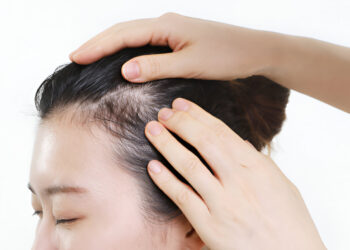
We added scalp massage (real massage, not just rubbing in product) three times a week for five minutes. That’s it. Within two months, she had baby hairs sprouting along her hairline for the first time in years.
Your scalp needs movement. Tension, stress, and sitting hunched over a laptop all day? That restricts blood flow. Your follicles are literally starving for oxygen while you’re applying serums to the surface that can’t penetrate because there’s no circulation to carry them in.
2. The Buildup You Can’t See (But Your Follicles Can Feel)
You wash your hair regularly. You use good products. So buildup isn’t your problem, right?
Wrong.
I see this constantly, especially here in New York with our hard water. Even if you’re washing your hair, you’re likely dealing with layers of buildup you don’t realize: mineral deposits from water, silicones from conditioner, oils that never fully rinsed out, dead skin cells, sebum trapped at the roots.
All of that sits on your scalp like a thick blanket, suffocating your follicles. Imagine trying to grow a garden with a tarp over the soil. That’s what your follicles are dealing with.
A client came in last month convinced she had sudden hair loss. I did a clarifying treatment, and the amount of gunk that came off her scalp? She was shocked. “I wash my hair twice a week!” she said. Yeah, but she wasn’t actually cleaning her scalp—just the hair.
Two weeks after starting weekly clarifying treatments, her scalp could breathe again. Her hair stopped feeling limp. New growth started appearing.
3. Your Moisture Balance Is Completely Wrong
This is the tricky one because it’s different for everyone. Some of you have dry scalps producing less oil than you need. Others have oily scalps drowning in sebum. Most of you? You have both—oily T-zone, dry everywhere else.
When your moisture balance is off, your scalp goes into crisis mode. Too dry? Your scalp gets inflamed, itchy, and follicles get irritated. Too oily? Excess sebum clogs follicles and creates a breeding ground for bacteria that disrupts the growth cycle.
I spent three years dealing with my own thinning because I was treating my scalp like it was dry (adding oils, avoiding clarifying shampoos) when actually, my T-zone was oily and suffocating my follicles. Once I figured out my actual scalp type and adjusted? My hair started growing again within months.
03
of 06
What Your Scalp Actually Needs (Not What Instagram Says)
Here’s where most people go wrong: they try to fix their hair when they should be fixing their scalp. Let me give you the actual foundations—no fluff, no 20-step routines you’ll never stick to.
Foundation 1: Circulation
Your follicles need blood flow. Period. This isn’t negotiable.
What actually works: Five minutes of scalp massage before you wash your hair. Not gentle rubbing—real pressure with your fingertips, moving your scalp (not your hair), working in small circles. Do this over your entire scalp. Your scalp should feel warm and slightly tingly when you’re done.
I do this every single time I wash my hair. Non-negotiable. It’s the difference between hair that grows and hair that stalls.
Foundation 2: Clean Follicles
You need to actually clean your scalp, not just your hair.
What actually works: Once a week, use a clarifying treatment. I’m talking about really getting in there with your fingertips, massaging your scalp (there’s that circulation again), letting the cleanser sit for a minute before rinsing thoroughly.
And I mean thoroughly. If you’re in NYC like me, you’re dealing with hard water. Invest in a shower filter ($30) or do a final rinse with diluted apple cider vinegar (1 part ACV to 4 parts water). Your scalp will actually be clean for the first time in months.
Foundation 3: Right Moisture Balance
Figure out what YOUR scalp actually needs. Is it producing too much oil? Not enough? Different in different zones?
Do the simple test: Wait 24 hours after washing. Press a blotting paper to different areas of your scalp (front, crown, sides, back). Heavy oil absorption? Oily scalp. Little to no oil? Dry scalp. Mixed results? Combination scalp.
Then—and this is crucial—match your products to your actual scalp type, not your hair type. Your shampoo is for your scalp. Your conditioner is for your hair. These are not the same thing.
04
of 06
The Timeline Nobody Wants to Hear (But You Need to Know)
You want me to tell you that if you start taking care of your scalp today, you’ll have long, thick hair in a month. I can’t do that. That’s not how biology works.
Here’s the honest timeline:
Week 1-2: Your scalp will feel different. Less tight, less itchy, cleaner. You probably won’t see visible hair changes yet. That’s normal.
Week 3-4: Less shedding in the shower. Your hair might feel stronger at the roots. Still no dramatic length, but that’s okay—you’re building the foundation.
Month 2-3: This is when you start seeing baby hairs. Little fuzzy new growth along your hairline and at your crown. This is your follicles waking up and saying “oh, we can grow again.”
Month 4-6: Measurable length. Your hair is retaining length better because it’s stronger from the root. Breakage is down. Growth is up. This is when people start noticing and asking what you’re doing differently.
I tell every client: you’re not going to see miracles overnight. But if you commit to scalp health for six months—really commit, not half-heartedly—you’ll see a difference that lasts.
05
of 06
What You Can’t Control (And That’s Okay)
Look, I need to be honest with you about something: scalp health can optimize your hair’s potential, but it can’t override your genetics. If your family grows hair slowly, you’re going to grow hair slowly. If you have naturally fine hair, improving your scalp health won’t give you thick, coarse strands.
But here’s what it CAN do: it can help you grow the best hair YOUR genetics allow. It can stop unnecessary shedding. It can prevent breakage. It can wake up dormant follicles that were struggling in a poor scalp environment.
I’ve seen clients gain 2-3 inches of length in six months just from addressing scalp health. Not because their hair suddenly grew faster, but because it stopped breaking off at the same rate it was growing. That’s real progress.
06
of 06
Your Scalp Is Talking—Are You Listening?
Your scalp has been trying to tell you something for months, maybe years. The occasional itch. The tight feeling after you wash. The fact that your hair seems thinner at the crown. The way products sit on your hair instead of absorbing. The baby hairs that broke off instead of growing.
These aren’t random. These are signals that your scalp environment isn’t supporting hair growth.
I spent 10 years learning to read these signals on hundreds of different scalps here in Queens. And what I’ve learned is this: when you fix the foundation—circulation, cleanliness, moisture balance—the hair follows.
Not overnight. Not with one magic product. But consistently, measurably, really.
So here’s what I want you to do: take five minutes today and actually assess your scalp. Not your hair—your scalp. Touch it. Look at it under good lighting. Think about the last time you really cleaned it, not just ran shampoo over your hair.
Your hair has been stuck because your scalp has been stuck. Fix one, and you fix the other.
That’s not a trend. That’s not a hack. That’s just biology finally working the way it’s supposed to.