
Table of Contents
You shampoo your hair regularly — yet your scalp still feels greasy, itchy, and clogged. Sound familiar?
Millions of people deal with scalp buildup without even realizing it. They blame dandruff, switch shampoos endlessly, or just live with the discomfort — never getting to the real root of the problem. It’s one of the most common scalp complaints people report online.
Here’s the truth: scalp buildup isn’t just about dirt. It’s a mix of dead skin cells, excess oil, product residue, and environmental debris that can accumulate on the scalp over time and may contribute to irritation and an unhealthy scalp environment.[1] After years of researching scalp health, this is what the evidence consistently points to.
The good news? Once you know what’s causing it, removing it is surprisingly simple.
In this guide, you’ll learn exactly how to spot the warning signs, identify your specific cause, and use the most effective, dermatologist-backed methods to finally get a clean, healthy scalp.
Let’s dig in.
01
of 10What Is Scalp Buildup?
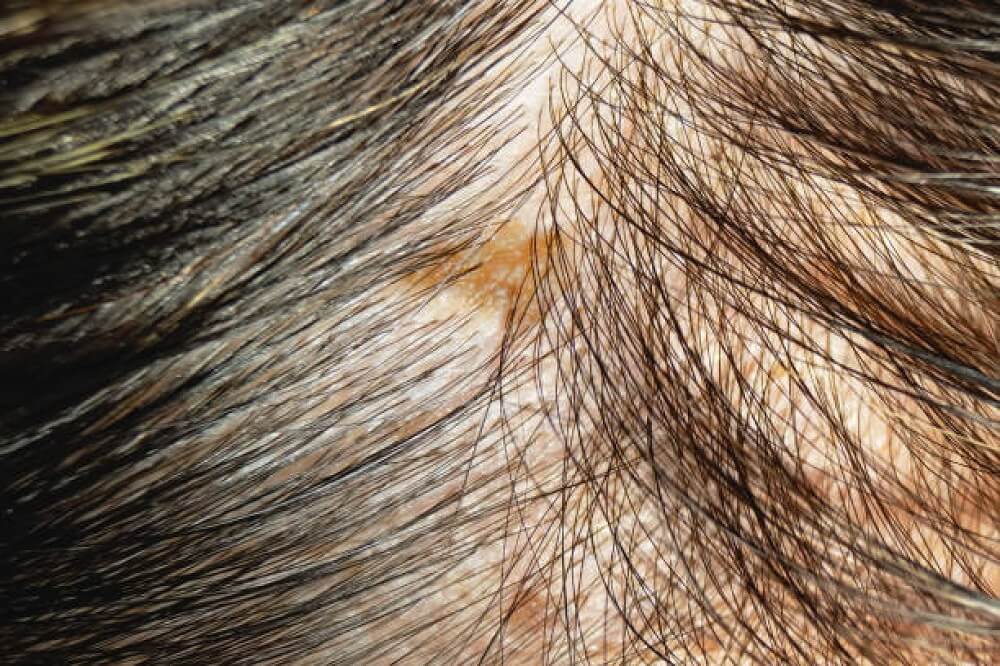
Scalp buildup happens when layers of oil, dead skin cells, sweat, and hair product residue accumulate on your scalp over time.
Think of it like a clogged drain — when too much debris piles up, things stop functioning efficiently. Excess oil, dead skin cells, and residue can accumulate around hair follicles, contributing to scalp irritation and creating conditions that may affect normal hair growth.[1]
It’s not the same as dandruff, though the two are often confused. Dandruff is commonly associated with an inflammatory reaction involving Malassezia yeast, while scalp buildup refers to the physical accumulation of oil, dead skin cells, and residue on the scalp.[5]
Anyone can develop it — regardless of hair type, age, or how often they wash their hair.
Signs You Have Scalp Buildup
✅ Scalp feels greasy or oily — even right after washing
✅ Persistent itching or irritation that won’t go away
✅ White or yellowish flakes on your scalp or shoulders
✅ Hair looks dull, flat, or weighed down
✅ Noticeable buildup or crust near the hairline or roots
✅ Unpleasant odor from the scalp between washes
✅ Hair feels sticky or heavy despite being “clean”
✅ Slower than usual hair growth
If 3 or more of these signs sound familiar — scalp buildup is likely the culprit.
02
of 10Scalp Buildup vs Dandruff
| Feature | Scalp Buildup | Dandruff |
|---|---|---|
| Cause | Oil, dead skin, product residue | Fungal overgrowth (Malassezia) |
| Flake Color | Yellowish or waxy | White or grey |
| Flake Texture | Thick, sticky, or crusty | Dry, loose, and powdery |
| Scalp Feel | Greasy and heavy | Dry or sometimes oily |
| Itching | Mild to moderate | Usually intense |
| Odor | Sometimes present | Rarely present |
| Treated With | Clarifying shampoo, exfoliation | Anti-fungal shampoo |
| Goes Away After Washing? | Partially | Temporarily |
03
of 10What Causes Scalp Buildup?
Scalp buildup rarely has just one cause. Most of the time, it’s a combination of several things happening at once.
1. Excess Oil (Sebum) Your scalp naturally produces oil to stay healthy — but too much of it creates a greasy layer that traps everything else. Stress, hormones, or simply oily skin can send sebum into overdrive.
2. Dead Skin Cells Skin renews itself every few weeks. When those dead cells don’t shed properly, they pile up on your scalp and clog your follicles.
3. Product Residue Dry shampoos, gels, serums, and conditioners — love them or hate them, they leave behind residue that regular shampoo often can’t fully wash away. People who layer multiple styling products daily are especially prone to this — their buildup is often almost entirely product-related.
4. Hard Water If you’re washing your hair with hard water, minerals such as calcium and magnesium can leave residue on the hair and scalp over time.[2] Hard water is one of the most overlooked causes of scalp buildup — most people never suspect the water itself.
5. Sweat Sweat mixes with oil and debris on your scalp. If you work out regularly but don’t rinse your scalp properly afterward, that sweat residue accumulates fast.
It’s rarely just one thing. Most people dealing with buildup are fighting 2–3 of these causes simultaneously — which is why a single shampoo swap rarely solves it.
04
of 10Scalp Buildup by Type: What Works for Your Scalp
Not all scalp buildup is the same — and neither is the fix. Your scalp type determines how buildup forms and how aggressively you need to treat it.
Oily Scalp Buildup forms fast and feels heavy. Clarify every 5–7 days, use a lightweight shampoo daily or every other day, and avoid any oil-based products near the roots.
Dry Scalp Buildup here is mostly dead skin and product residue — not oil. Use a gentle clarifying shampoo every 10–14 days. Over-clarifying will make dryness worse, so less is more.
Sensitive Scalp Avoid harsh sulfates and fragranced products — they trigger inflammation that accelerates buildup. Stick to fragrance-free, pH-balanced formulas and exfoliate no more than once every two weeks.
Scalp Buildup by Hair Type
Your hair type affects how quickly buildup forms — and how you should deal with it.
Fine Hair Fine hair gets weighed down fast. Styling products meant to add volume settle directly on the scalp and accumulate quickly. Use a clarifying shampoo every 5–6 days and go light on volumizing sprays.
Curly & Coily Hair Natural oils can’t travel down the curl pattern easily, so they pool at the roots. Heavy creams and butters make it worse. Clarify every 7–10 days and prioritize lightweight, water-based products.
Straight & Thick Hair Oil spreads more evenly, so buildup is slower — but product residue still accumulates. A bi-weekly clarifying wash is usually enough.
05
of 10How to Remove Scalp Buildup
Step 1: Use a Clarifying Shampoo Wash with a clarifying shampoo once a week. It strips away oil, product residue, and mineral deposits that regular shampoo misses.
Step 2: Exfoliate Your Scalp Use a scalp scrub or exfoliating brush while shampooing. Gently massage in circular motions for 2–3 minutes to loosen dead skin and buildup.
Step 3: Apply a Scalp Treatment Salicylic acid is commonly used in scalp treatments because it helps loosen excess flakes, scales, and surface buildup.[3] Leave it on for 5–10 minutes before rinsing.
Step 4: Rinse Thoroughly Always rinse longer than you think is necessary. Leftover shampoo or treatment residue adds to the buildup cycle.
Step 5: Follow Up with a Lightweight Conditioner Apply conditioner only to the ends — never the scalp. Heavy conditioner on the scalp speeds buildup right back up.
Step 6: Repeat Weekly Consistency is key. One deep clean won’t cut it — make this a weekly routine for lasting results.
Best Ingredients to Look For
You don’t need a dozen products. Just look for these key ingredients on the label.
Salicylic Acid — dissolves dead skin and oil buildup at the follicle level. Best for oily and acne-prone scalps.
Tea Tree Oil — antimicrobial and clarifying. Good for buildup mixed with mild irritation or itchiness.
Zinc Pyrithione — controls excess sebum and keeps the scalp microbiome balanced.
Apple Cider Vinegar — breaks down product residue and mineral deposits from hard water. Use diluted as a rinse.
06
of 10Common Mistakes That Make Buildup Worse
Most people don’t realize they’re making their scalp buildup worse — not better. The biggest culprit? Washing too often with the wrong shampoo. Harsh daily cleansing strips natural oils, which triggers your scalp to overproduce sebum in response. Harsh cleansing may strip away some of the scalp’s natural protective oils and affect the scalp barrier, which can leave the scalp feeling dry or irritated in some individuals.[4]
Then there’s the rinsing problem. Most people lather their lengths and call it done — but buildup lives at the root. And even when people do focus on the scalp, they rinse too quickly, leaving shampoo residue behind. That residue becomes tomorrow’s buildup.
Heavy, silicone-based products are another silent offender. Ingredients like dimethicone coat the scalp and trap debris underneath — check your product labels. Pair that with never using a clarifying shampoo, and residue simply compounds week after week without a reset.
Finally, conditioner on the scalp. It feels moisturizing, but it clogs follicles almost immediately. Conditioner belongs on the ends — full stop.
07
of 10How to Prevent Scalp Buildup
Good news — prevention is simpler than treatment.
A few small habit shifts are all it takes to keep your scalp clean and buildup-free long term.
Clarify once a week, even when your scalp feels fine. Rinse thoroughly after every wash. Keep conditioner away from your roots. Limit heavy styling products — and on days you use them, rinse your scalp with warm water before bed.
If you have hard water, a shower filter is one of the best low-effort investments you can make for your scalp health.
That’s genuinely it. Stay consistent, and buildup rarely becomes a problem again.
08
of 10When to See a Dermatologist
Most scalp buildup clears up with the right home routine. But if your symptoms persist after 4–6 weeks of consistent care, it’s time to get professional eyes on it.
See a dermatologist if you notice intense inflammation, open sores, sudden hair loss, or buildup that keeps returning no matter what you try. These can signal an underlying condition — like seborrheic dermatitis or psoriasis — that needs medical treatment, not just a better shampoo.
The honest truth? Most people fall somewhere in the middle. If something feels off and isn’t improving, trust that instinct. Don’t wait it out — but don’t spiral either. Catching a real issue early always makes a difference.
09
of 10Frequently Asked Questions
10
of 10References
- Trüeb RM, Henry JP, Davis MG, Schwartz JR. Scalp Condition Impacts Hair Growth and Retention via Oxidative Stress. International Journal of Trichology. 2018.
- Cleveland Clinic. Hard Water and Hair Health.
- American Academy of Dermatology Association. Hair and Scalp Care Guidance.
- National Library of Medicine (PubMed). Research on Skin Barrier Function and Cleansing.
- Medical News Today. Scalp Buildup: Causes, Symptoms, and Treatment.