

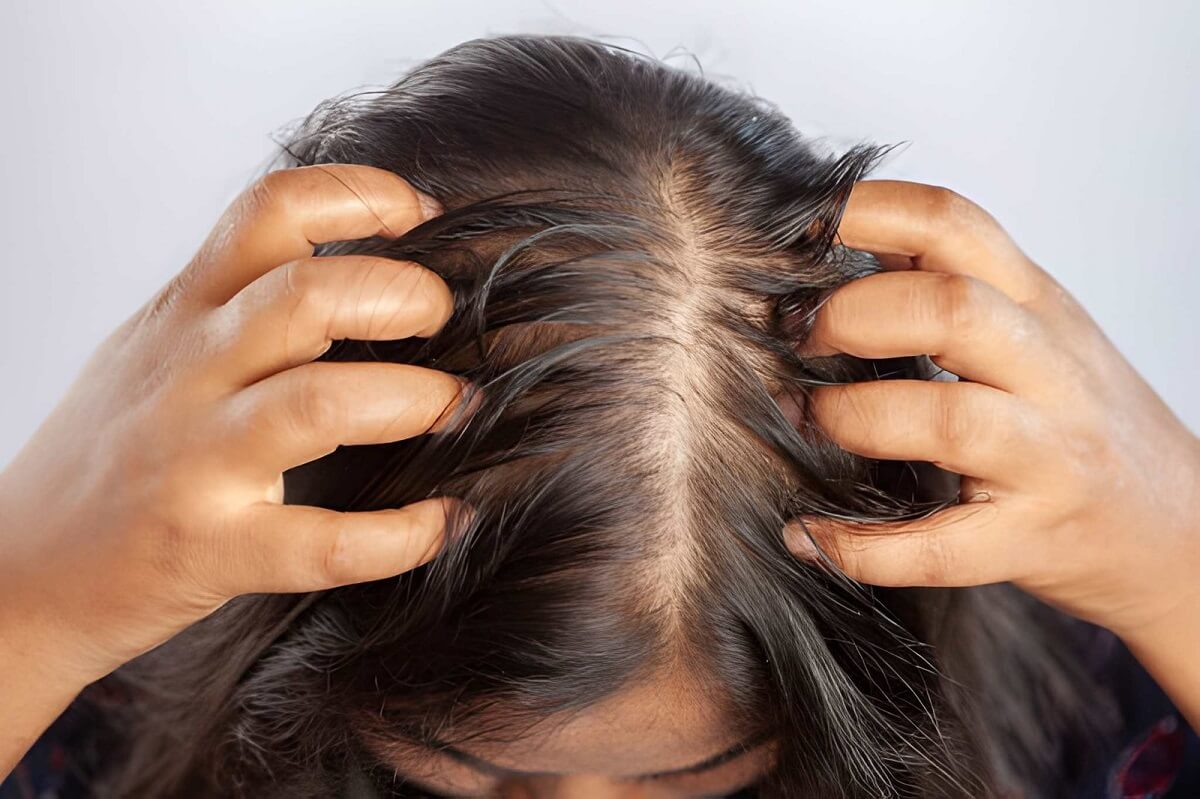
It’s 11 PM. You’re scrolling through your phone in bed, and your scalp feels… off. Maybe it’s been itchy all day. Maybe you noticed flakes on your black sweater during that presentation. Maybe your hair just feels different. So you start Googling “signs of an unhealthy scalp”—and honestly, you’re not even sure what you’re looking for. Am I overreacting, or is something actually wrong?
Here’s what I tell every client who sits in my Astoria chair with that same worried look: you’re not overreacting. Your scalp is trying to communicate with you, and learning to read those signals is one of the smartest things you can do for your hair health.
After 10 years of examining hundreds of scalps here in Queens—from marketing execs stressed about work presentations to new moms dealing with postpartum changes—I’ve identified the 7 most common signs of an unhealthy scalp. More importantly, I’ll tell you what each sign actually means and when you can fix it yourself vs. when you need professional help.
Let’s decode what your scalp is telling you.
What a Healthy Scalp Actually Looks Like (So You Can Spot the Signs of Unhealthy Scalp)
Before we dive into problems, you need to know what healthy looks like. A healthy scalp should feel comfortable—no constant itching, burning, or tightness.
Visually, it matches your natural skin tone without pink or red patches. You should be able to go 2-3 days between washes comfortably, and your hair shouldn’t feel greasy within hours of washing.
I always tell my clients: a healthy scalp is like good Wi-Fi. You don’t notice it when it’s working—you only pay attention when something goes wrong.
Now, let’s talk about the 7 signs of an unhealthy scalp that you need to watch for.
Sign #1: Persistent Itching or Burning
If you can’t stop touching your head, that’s your first red flag. The itch might be localized or all over. Sometimes there’s redness if you look closely under good lighting.
What causes it: Product irritation, dry scalp, follicle inflammation, or fungal overgrowth. I see this spike every winter in Queens. The radiator heat blasts all night, the air is bone-dry, and suddenly everyone’s scalp is screaming.
When to worry: If itching started after a product change and there are no open sores, you can handle this at home. Switch to a gentle, fragrance-free shampoo and stop all styling products for one week. But if there’s a burning sensation, visible sores, or itching that prevents sleep, see a dermatologist.
Sign #2: Flakes (But Is It Dandruff or Dry Scalp?)
Here’s where most people get confused. Flakes don’t automatically mean dandruff.
Dry scalp flakes are small, white, and powdery. Your scalp feels tight. Dandruff flakes are larger, yellowish, sometimes oily or sticky. Your scalp might feel greasy.
The treatments are opposite, so getting this wrong makes everything worse. In my 10 years, I’d say 60% of people who think they have dandruff actually have dry scalp.
Last winter, a client came in with “sudden dandruff.” She’d been using Head & Shoulders for two weeks and it was getting worse. I checked her scalp—bone dry, small white flakes, no oil. The anti-dandruff shampoo was stripping more oil, making it worse. We switched to a hydrating shampoo plus weekly oil treatments. Flakes gone in 10 days.
NYC reality check: The water in Queens is notoriously hard. That mineral buildup on your scalp? Looks like flakes but it’s actually calcium and magnesium deposits. A $30 shower filter solved this for dozens of my clients.
Sign #3: Greasy Hair Within Hours of Washing
Your hair looks wet even when dry. Visible shine on your scalp, especially at the crown. Hair clumps together and lacks volume.
Here’s the vicious cycle: You wash daily because it’s greasy → washing strips natural oils → your scalp panics and produces MORE oil → you wash again. I see this constantly.
I had a client who was washing twice a day—morning and night. Her hair was greasier than ever. Her scalp was in survival mode. We slowly reduced to once every other day with a balancing shampoo. Took three weeks for her scalp to recalibrate, but now she can go two days comfortably.
Quick fix: Stop overwashing. Use a salicylic acid or clay-based shampoo, wash every other day, and avoid putting conditioner on your roots. Give your scalp 2-3 weeks to adjust.
Sign #4: Redness or Inflammation
Pink or red patches that are darker than your natural skin tone. Sometimes raised, sometimes flat. Could be localized or widespread.
Common culprits: Irritation from new hair dye or bleach, sun damage (yes, your scalp can sunburn), seborrheic dermatitis, or tight hairstyles causing tension.
A client came in with red patches after getting balayage at a salon. Turned out she was allergic to the developer they used. We had to strip her routine down to fragrance-free baby shampoo for three weeks until her scalp healed.
When to see a derm: If redness spreads quickly, you have thick scales, there’s pain, or it doesn’t resolve in one week.
Sign #5: Your Scalp Hurts When You Touch It
You might not see anything obvious, but your scalp is tender. Sometimes small bumps, sometimes just soreness.
What causes it: Inflamed hair follicles (folliculitis), tight hairstyles, sunburn, or stress making your scalp nerves hypersensitive. I call this “stressed scalp syndrome.” I see it a lot in clients with high-pressure jobs.
A lawyer client wore her hair in a tight bun every single day for court. Her scalp was so tender she couldn’t brush her hair without wincing. We gave her scalp a “break week”—loose styles only, gentle massage, anti-inflammatory treatments. Pain gone in 10 days.
Quick action: Stop tight hairstyles immediately. Gentle scalp massage to improve circulation.
Sign #6: More Hair in Your Brush Than Usual
Clumps in the shower drain. Excessive hair on your pillow. Visible scalp in areas that were previously full.
Normal shedding is 50-100 hairs per day. If you’re seeing significantly more, your scalp health might be the issue.
Here’s what I tell clients: If your scalp is unhealthy—inflamed, clogged, dry, or oily—your hair follicles can’t function at their best. Think of it like trying to grow a garden in bad soil.
When it’s your scalp: If shedding comes with itching, flaking, oiliness, or pain, address those scalp issues first. Track shedding for two weeks. If it’s improving, keep going. If worsening, see a professional.
When it’s NOT your scalp: Sudden onset after major life events (pregnancy, surgery, illness) or family history of baldness usually means it’s hormonal or genetic, not scalp-related.
Sign #7: Buildup That Won’t Wash Out
Your scalp feels waxy or coated even after washing. Hair looks dull, lacks volume. Products don’t absorb—they just sit on top.
The culprits: Silicones in products, heavy oils, dry shampoo overuse, or hard water mineral deposits.
A client was using dry shampoo 5-6 days a week between washes. Her scalp had a visible white coating. We did a clarifying treatment and I literally showed her the gunk that came out. She was horrified.
Fix it now: Weekly clarifying shampoo. Apple cider vinegar rinse (1:4 ratio with water). Avoid silicones. Install a shower filter if you’re in NYC.
When to DIY vs. When to See a Dermatologist
You can handle at home if:
- Symptoms started recently (within 1-2 months)
- You can identify a trigger (new product, stress, weather)
- No open sores or severe pain
- You have 1-2 signs, not all 7
See a professional if:
- Symptoms persist despite home treatment (4+ weeks)
- Sudden, severe onset
- Open sores, bleeding, or crusting
- Hair loss in patches
- Severe pain that interrupts daily life
- You have 4+ signs simultaneously
Look, I’m not a dermatologist. I’m a scalp specialist with 10 years of hands-on experience. But if your gut is screaming “something is really wrong,” listen to it. There’s no shame in getting professional help.
Your Monthly Scalp Check-In
Screenshot this and check once a month:
□ Persistent itching or burning?
□ Visible flakes on shoulders/hair?
□ Greasy within 24 hours of washing?
□ Redness or pink patches?
□ Tenderness or pain when touching scalp?
□ More hair shedding than usual?
□ Coated feeling even after washing?
0 checks: Healthy scalp! Keep doing what you’re doing.
1-2 checks: Minor issues. Adjust products/routine. Monitor for 2 weeks.
3-4 checks: Scalp needs attention. Implement changes now.
5+ checks: Time to see a dermatologist.
You’re Not Overreacting—You’re Being Proactive
You made it. You now know the 7 signs of an unhealthy scalp and what to do about them. That 11 PM Google search brought you here for a reason: your scalp was trying to get your attention, and you listened.
Here’s what you know now that 90% of people don’t: you can assess your own scalp health. You can identify issues early. You can make informed decisions about when to DIY and when to see a pro. That’s power.
Take five minutes right now to do the self-check. Screenshot the checklist. And if you identified 1-2 signs, start making changes this week. Your scalp—and your hair—will thank you.
I’ve spent 10 years in the trenches of scalp health here in Queens, and I can tell you this: every healthy head of hair I’ve seen started with someone paying attention to their scalp. You’re already ahead of the game.
Want to dive deeper? Check out my guide on how to determine your scalp type and build a routine that actually works for YOUR scalp.